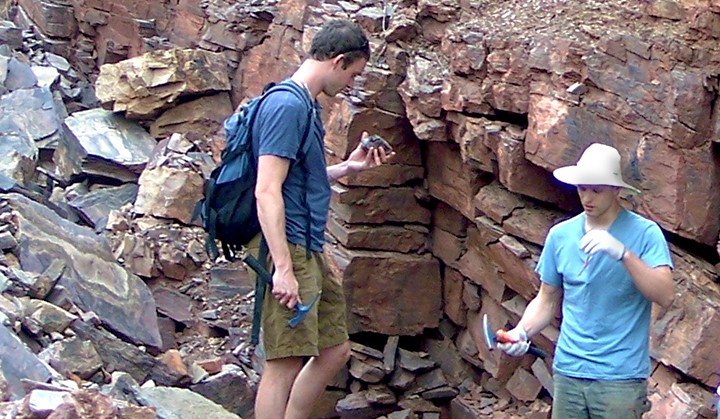
Chris Reinhard and Noah Planavsky conduct research for the study in China.
Geologists are letting the air out of a nagging mystery about the development of animal life on Earth. Scientists have long speculated as to why animal species didn't flourish sooner, once sufficient oxygen covered the Earth's surface. Animals began to prosper at the end of the Proterozoic period, about 800 million years ago - but what about the billion-year stretch before that, when most researchers think there also was plenty of oxygen? Well, it seems the air wasn't so great then, after all. In a study published Oct. 31 in Science, Yale researcher Noah Planavsky and his colleagues found that oxygen levels during the "boring billion" period were only 0.1% of what they are today. In other words, Earth's atmosphere couldn't have supported a diversity of creatures, no matter what genetic advancements were poised to occur. "There is no question that genetic and ecological innovation must ultimately be behind the rise of animals, but it is equally unavoidable that animals need a certain level of oxygen," said Planavsky, co-lead author of the research along with Christopher Reinhard of the Georgia Institute of Technology.
TO READ THIS ARTICLE, CREATE YOUR ACCOUNT
And extend your reading, free of charge and with no commitment.