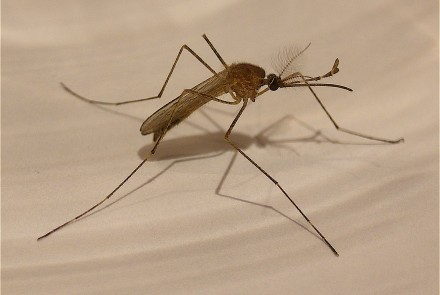
Image courtesy edans on flickr
An anti-malarial treatment that lost its status as the leading weapon against the deadly disease could be given a new lease of life, with new research indicating it simply needs to be administered differently. The findings could revive the use of the cheap anti-malarial drug chloroquine in treating and preventing the mosquito-bourne disease, which claims the lives of more than half a million people each year around the world. The parasite that causes malaria has developed resistance to chloroquine, but research carried out at the Australian National University (ANU) and Germany's University of Heidelberg has shown that the parasite protein that causes resistance has an Achilles' heel. "We studied diverse versions of this protein and in all cases found that it is limited in its capacity to remove the drug from the parasite," said malaria researcher Dr Rowena Martin, from the ANU Research School of Biology. "This means malaria could once again be treated with chloroquine if it is administered twice-daily, rather than just once a day". Once hailed as a wonder drug, chloroquine is still used in developing nations in the South Pacific, Africa, Asia and South America, but has been withdrawn from use in many developed countries. Dr Martin and her colleagues also revealed how the protein may have developed resistance to chloroquine.
TO READ THIS ARTICLE, CREATE YOUR ACCOUNT
And extend your reading, free of charge and with no commitment.