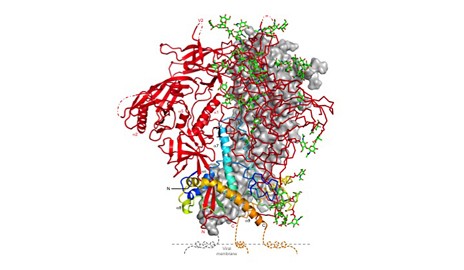
Structure of the HIV spike protein in its closed state, which makes it less detectable to immune system. (Illustration by Peter Kwong)
HIV is adept at eluding immune system responses because the protein it uses to infect cells is constantly changing. Now a team of researchers including scientists from Yale have stripped the cloak from this master of disguise, providing a high resolution image of this surface spike protein and monitoring how it constantly changes its shape, information that suggests new ways to attack the virus through drugs and vaccines. In two papers published simultaneously online Oct. 8 in the journals Science and Nature. team of researchers led by scientists from the labs of Walther Mothes at Yale University, Peter Kwong at Vaccine Research Center at the National Institute of Allergy and Infectious Diseases and Scott Blanchard at Weill Cornell Medical College describe the structure and dynamics of the HIV spike protein, which the virus uses to fuse with and enter cells. "Now we can see how this fusion machine works, and in a general way it is similar to how fusion works in influenza and Ebola," said Mothes, associate professor of microbial pathogenesis and co-senior author . The spike protein needs to be in "an open state" to fuse with and infect cells.
TO READ THIS ARTICLE, CREATE YOUR ACCOUNT
And extend your reading, free of charge and with no commitment.