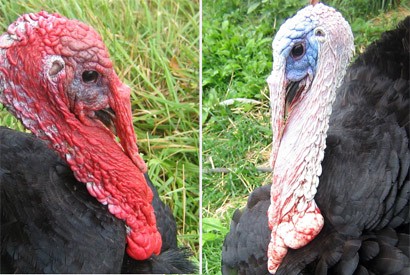
Researchers took inspiration from the way turkey skin color is altered to create a new sensor that can change color when exposed to volatile chemicals. (Photos by Valerie Burtchett)
Some may think of turkeys as good for just lunch meat and holiday meals, but bioengineers at UC Berkeley saw inspiration in the big birds for a new type of biosensor that changes color when exposed to chemical vapors. This feature makes the sensors valuable detectors of toxins or airborne pathogens. Turkey skin, it turns out, can shift from red to blue to white, thanks to bundles of collagen that are interspersed with a dense array of blood vessels. It is this color-shifting characteristic that gives turkeys the name "seven-faced birds” in Japanese and Korean. The researchers say that spacing between the collagen fibers changes when the blood vessels swell or contract, depending upon whether the bird is excited or angry. The amount of swelling changes the way light waves are scattered and, in turn, alters the colors we see on the bird's head. Seung-Wuk Lee, UC Berkeley associate professor of bioengineering, led a research team in mimicking this color-changing ability to create biosensors that can detect volatile chemicals.
TO READ THIS ARTICLE, CREATE YOUR ACCOUNT
And extend your reading, free of charge and with no commitment.