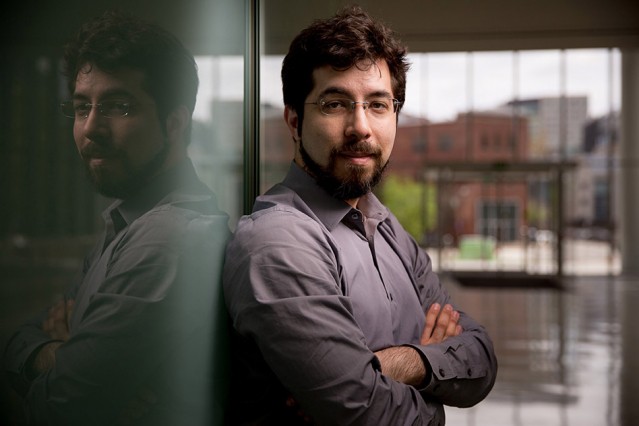
Edward Boyden
How is the mind formed, and what does it mean to be human? These are the questions that intrigue Edward Boyden, an associate professor of biological engineering and brain and cognitive sciences at MIT. To answer them, we will need a much deeper understanding of how the brain works, according to Boyden, who leads the synthetic neurobiology research group at the MIT Media Laboratory and the McGovern Institute for Brain Research at MIT. "If we understand how the circuitry of the brain computes things like thoughts and emotions, it could help us to know more about what it means to be human," Boyden says. To this end, he and his group are developing techniques to allow neuroscience researchers to study the brain, and how it operates, at a more fundamental level of detail. "Perhaps someday in the future, if we understand how the brain works, we would understand the nature of irrationality and strife, and other aspects of the human condition," Boyden says. "It could help humanity gain for the better." Optogenetics pioneer Boyden has pioneered the development of technologies such as optogenetic tools, in which light-sensitive proteins from algae and bacteria are added to neurons. This allows the neurons to be activated or silenced with pulses of visible light.
TO READ THIS ARTICLE, CREATE YOUR ACCOUNT
And extend your reading, free of charge and with no commitment.