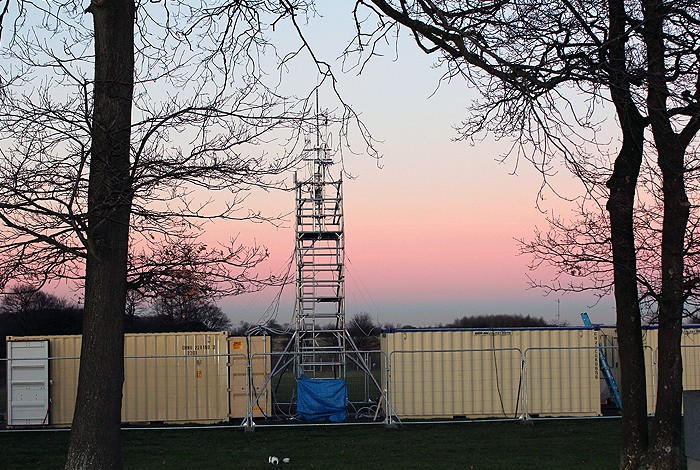
A new study by a science team led by Los Alamos National Laboratory stresses the importance of understanding mixed black and brown carbon in smoke emissions for climate models. The particulates found in urban smoke are especially prone to absorbing sunlight and having a heating effect on the planet. A measurement station, shown here (Detling, UK), is one of several deployed in the UK throughout the study. Photo courtesy Manvendra Dubey, Los Alamos National Laboratory.
Cloaking urban areas and wildfire zones, tiny smoke particles suspended in the atmosphere have a sizeable effect on our climate. response to drought. "The new measurements resolve carbon particles that are of several types, each with its own effect on climate," said project leader Manvendra Dubey of Los Alamos National Laboratory. EMBARGOED, 3 a.m. Mtn. Time, 9/30/15 (Nature ) - First field demonstration of warming caused by soot and brown carbon. LOS ALAMOS, N.M. Sept. 30, 2015-Cloaking urban areas and wildfire zones, tiny smoke particles suspended in the atmosphere have a sizeable effect on our climate.
TO READ THIS ARTICLE, CREATE YOUR ACCOUNT
And extend your reading, free of charge and with no commitment.