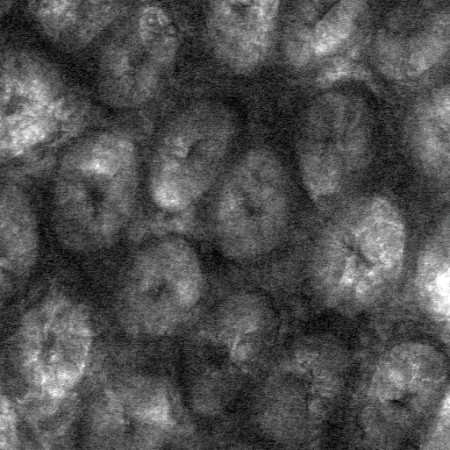
Image of the gut surface taken using brightfield microscopy. The circular features are collections of cells, called crypts, that make up the surface of the colon.
In the ongoing hustle and bustle of our intestines, where bacteria and food regularly intermingle, there is another substance that, to the surprise of researchers, has been found to rapidly change: the gel that lines the gut. A new Caltech study is the first to show how the structure of this gut gel, or mucus, can change in the presence of certain substances, such as bacteria and polymers-a class of long-chained molecules that includes dietary fiber. The work, to be published online the week of June 13 in the Proceedings of the National Academy of Sciences , could lead to the development of new drugs or diets for intestinal conditions such as irritable bowel disease. Our intestinal tracts are lined with a mucus gel that acts as a protective barrier between the insides of our bodies and the outside world. The gel lets in nutrients and largely blocks out bacteria, preventing infections. It also regulates how some drugs are delivered elsewhere in our bodies. Researchers had previously studied how the gel can be damaged, for instance when bacteria feed on the gut's lining.
TO READ THIS ARTICLE, CREATE YOUR ACCOUNT
And extend your reading, free of charge and with no commitment.