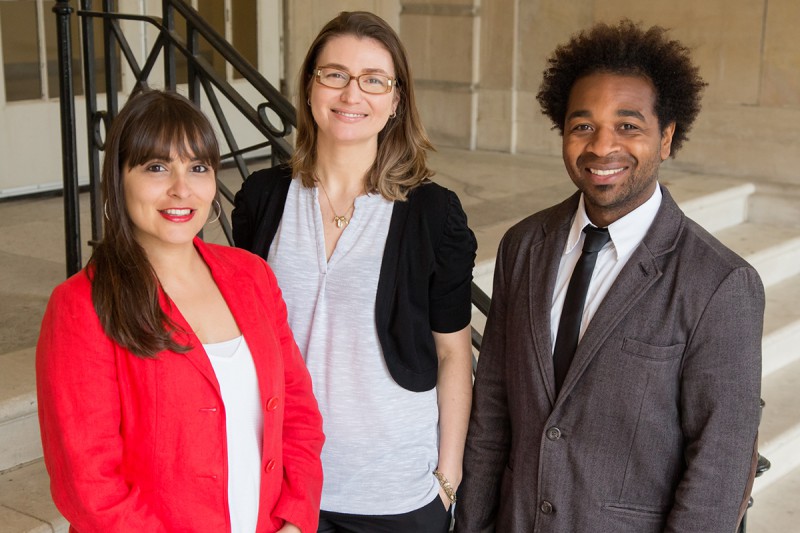
University of Illinois kinesiology and community health Andiara Schwingel’s studies show that health-promotion programs may be more successful at reaching older Latinas in the U.S. if they incorporate the religious and spiritual values that tend to be important to these women. Shown with Schwingel, center, are her co-authors, left, doctoral student Patricia Gálvez and post-doctoral research fellow Emerson Sebastião. Alumna Deborah Linares also was a co-author on the studies. Photo by L. Brian Stauffer
CHAMPAIGN, Ill. — A culturally sensitive lifestyle intervention showed promise at motivating Latinas living in the U.S. to eat better and exercise more by connecting healthy-living behaviors with the lives of saints and prominent religious figures, new studies found. Several recent papers about the project, including a new study published in the Journal of Aging and Health, add to a growing body of research that indicates health interventions may have greater success promoting lifestyle changes among the nation's rapidly growing Latino population if the content is culturally sensitive, integrating the spiritual and family values that are central to these women's lives. Kinesiology and community health professor Andiara Schwingel of the University of Illinois developed the program, called Abuelas en Acción (Grandmothers in Action). Geared toward Latinas ages 50 and older, Abuelas en Acción promotes physical activity, nutrition and stress management using the principles of several evidence-based behavioral change programs. Promotoras, female community leaders familiar with local customs and traditions, administered the program. They received 18 hours of training to deliver the religious and the health education curricula, which included group discussions and hands-on activities, in six monthly workshops.
TO READ THIS ARTICLE, CREATE YOUR ACCOUNT
And extend your reading, free of charge and with no commitment.