"Children seem to interpret disjunction like conjunction," observes MIT Linguistics Danny Fox. However, Fox adds, although "it has been claimed children are very different from adults in the interpretation of logical words," the study’s larger implication is almost the opposite -- namely that "the child is [otherwise] identical to the adult, but there is a very small parameter that distinguishes them."
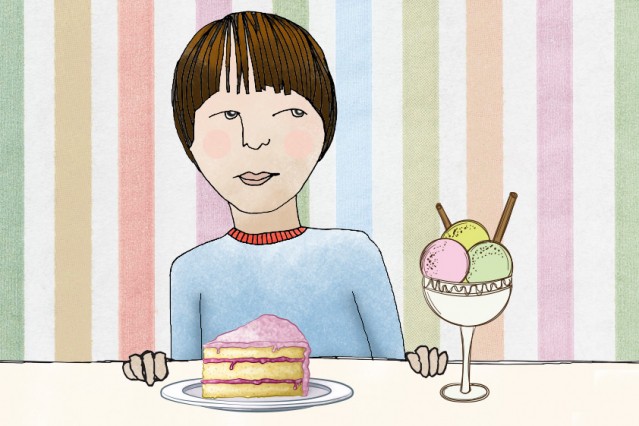
Imagine, for a moment, you are a parent trying to limit how much dessert your sugar-craving young children can eat. "You can have cake or ice cream," you say, confident a clear parental guideline has been laid out. But your children seem to ignore this firm ruling, and insist on having both cake and ice cream. Are they merely rebelling against a parental command? Perhaps. But they might be confusing "or" with "and," as children do at times, something studies have shown since the 1970s. What seems like a restriction to the parent sounds like an invitation to the child: Have both! But why does this happen? Now a study by MIT linguistics professors and a team from Carleton University, based on an experiment with children between the ages of 3 and 6, proposes a new explanation, with a twist: In examining this apparent flaw, the researchers conclude that children deploy a more sophisticated mode of logical analysis than many experts have previously realized. Indeed, say the linguists, children use almost entirely the same approach as adults when it comes to evaluating potentially ambiguous sentences, by testing and "strengthening" them into sentences with more precise meanings, when disjunction and conjunction ("or" and "and") are involved.
TO READ THIS ARTICLE, CREATE YOUR ACCOUNT
And extend your reading, free of charge and with no commitment.