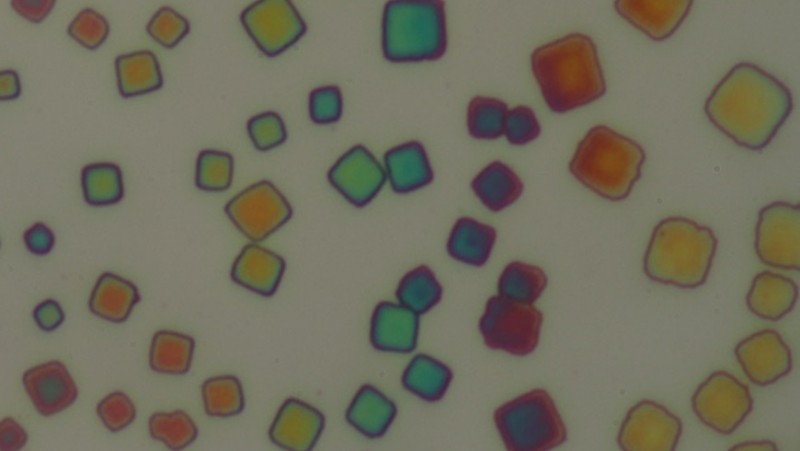
Superlattices under the microscope (white light illumination). Image: Empa
Excited photo-emitters can cooperate and radiate simultaneously, a phenomenon called superfluorescence. Researchers from Empa and ETH Zurich, together with colleagues from IBM Research Zurich, have recently been able to create this effect with long-range ordered nanocrystal superlattices. This discovery could enable future developments in LED lighting, quantum sensing, quantum communication and future quantum computing. The study has just been published in the renowned journal "Nature". Some materials spontaneously emit light if they are excited by an external source, for instance a laser. This phenomenon is known as fluorescence. However, in several gases and quantum systems a much stronger emission of light can occur, when the emitters within an ensemble spontaneously synchronize their quantum mechanical phase with each other and act together when excited.
TO READ THIS ARTICLE, CREATE YOUR ACCOUNT
And extend your reading, free of charge and with no commitment.