 EPFL scientists identified more than 1000 2D materials.
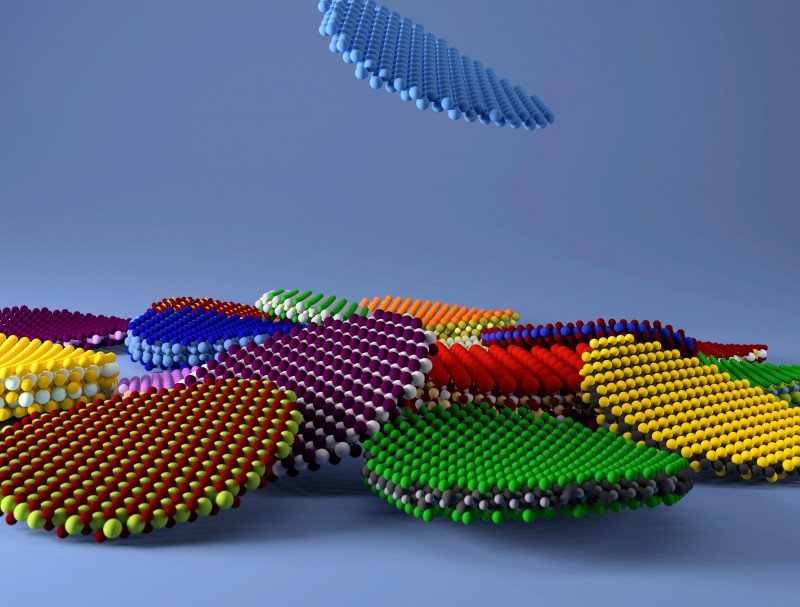
A team from EPFL and NCCR Marvel has identified more than 1,000 materials with a particularly interesting 2D structure. Their research, which made the cover page of Nature Nanotechnlogy, paves the way for groundbreaking technological applications. 2D materials, which consist of a few layers of atoms, may well be the future of nanotechnology. They offer potential new applications and could be used in small, higher-performance and more energy-efficient devices. 2D materials were first discovered almost 15 years ago, but only a few dozen of them have been synthesized so far. Now, thanks to an approach developed by researchers from EPFL's Theory and Simulation of Materials Laboratory (THEOS) and from NCCR-MARVEL for Computational Design and Discovey of Novel Materials, many more promising 2D materials may now be identified. Their work was recently published , and even got a mention on the cover page. The first 2D material to be isolated was graphene, in 2004, earning the researchers who discovered it a Nobel Prize in 2010. This marked the start of a whole new era in electronics, as graphene is light, transparent and resilient and, above all, a good conductor of electricity. It paved the way to new applications in numerous fields such as photovoltaics and optoelectronics. "To find other materials with similar properties, we focused on the feasibility of exfoliation," explains Nicolas Mounet, a researcher in the THEOS lab and lead author of the study. "But instead of placing adhesive strips on graphite to see if the layers peeled off, like the Nobel Prize winners did, we used a digital method." More than 100,000 materials analyzed
TO READ THIS ARTICLE, CREATE YOUR ACCOUNT
And extend your reading, free of charge and with no commitment.
Your Benefits
- Access to all content
- Receive newsmails for news and jobs
- Post ads