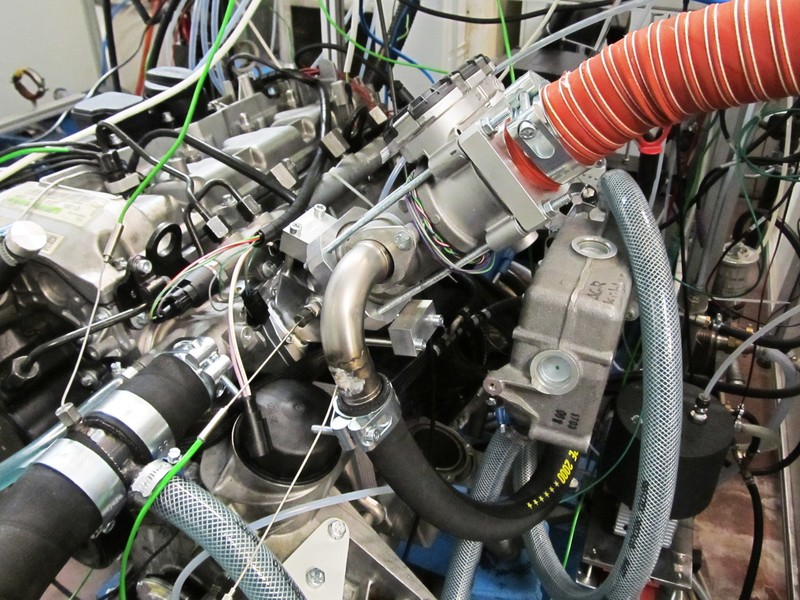
The engine at TU Wien, which runs on bio-ethanol
Ethanol can make an important contribution to climate protection: at TU Wien, a diesel engine has been developed that can run on over 70% bioethanol. TU Wien has developed an engine that uses two different types of fuel simultaneously: it uses both bioethanol and diesel, which is used for ignition. A special duel-fuel combustion process has been developed for this purpose, which now enables the use of a large proportion of bioethanol in diesel engines. Measurements show that this new technology improves engine efficiency - overall CO2 emissions have been reduced by up to 39%. Less fossil fuel, more nature Besides the development of new and more efficient combustion engines, the fuel also plays an important role within the efforts to reduce the pollutant and greenhouse gas emissions produced by the transport sector. At TU Wien, the use of bioethanol as an additional fuel in diesel engines has been investigated. "In some countries, it has been common practice to add larger quantities of ethanol to petrol for a long time. However, until now doing this in diesel engines has only been possible to a very limited extent," says Prof. Bernhard Geringer from the Institute for Powertrains and Automotive Technology at TU Wien. If you were to simply mix bioethanol into the diesel tank, it would cause ignition problems. Bernhard Geringer and his team have therefore developed a dual-fuel combustion process. "Ignition is initiated by means of a direct injection diesel fuel jet, like in conventional diesel engines," explains Geringer. "In our model, however, the alcoholic fuel is added to the intake air upstream of the engine. It is then ignited after the diesel ignition in the combustion chamber. In a manner of speaking, the diesel functions as a spark plug for the bioethanol." Less CO2, less soot, less fine dust pollution
TO READ THIS ARTICLE, CREATE YOUR ACCOUNT
And extend your reading, free of charge and with no commitment.