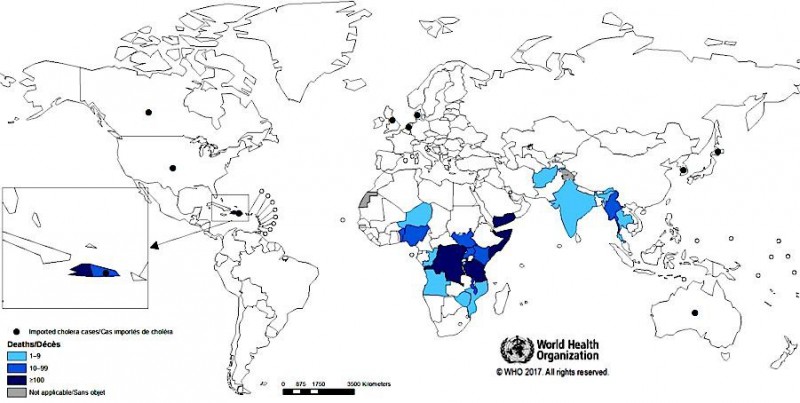
Using data gathered during a cholera outbreak in Chad, EPFL researchers have found that a response strategy that targets the neighborhood close to reported cases can more effectively contain the outbreak than a large-scale campaign that targets a wider district or an entire city. The World Health Organization aims to eradicate cholera by 2030. Through its roadmap, it intends to reduce cholera deaths by 90% and prevent the spread of the disease in 20 cholera-affected countries. Using a mathematical model to process data collected during a cholera outbreak in N'Djamena, Chad, in 2011, EPFL researchers found that a small-scale response that targets the area around households with reported cholera cases could prevent the disease from spreading. Such an approach would require fewer resources and could be implemented more quickly. This type of response would be particularly effective during the early stages of an epidemic, when the number of cases is still low, or to stamp out remaining pockets of the disease after a large-scale response. The researchers' findings have been published in PLOS Medicine.
TO READ THIS ARTICLE, CREATE YOUR ACCOUNT
And extend your reading, free of charge and with no commitment.
Your Benefits
- Access to all content
- Receive newsmails for news and jobs
- Post ads