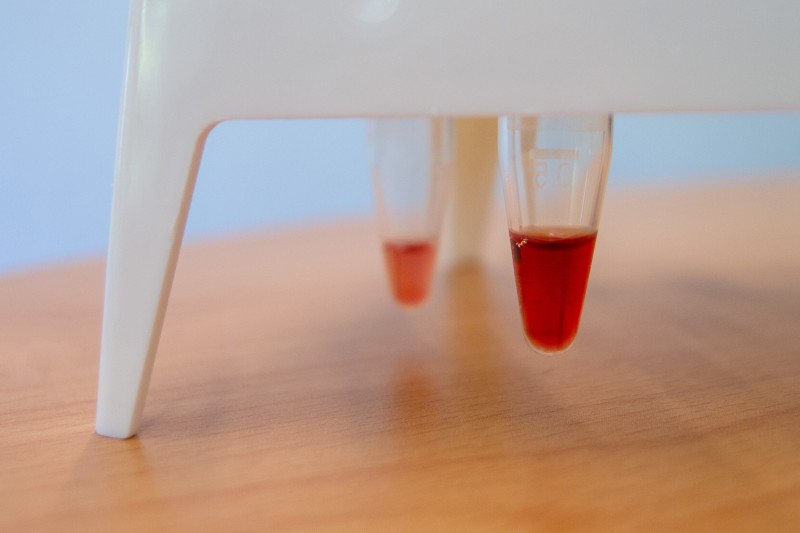
 The picture shows a solution of isolated and purified superoxide oxidase which was used in the laboratory for biochemical experiments. The characteristic raspberry colour contains the protein in two so-called haem groups, similar to the haemoglobin which gives blood its red colour.
Oxygen radicals occur as a by-product when living beings burn carbohydrates or fat. They are suspected of accelerating the ageing process in humans and animals, and to be partly responsible for severe illnesses such as Alzheimer's or certain types of cancer. Researchers at the University of Bern and the University of Stockholm have now discovered a so far unknown defense mechanism against oxygen radicals which could serve as a base for various medications. Living beings burn nutrients such as carbohydrates or fats to gain energy. In some of these burning reactions, oxygen is transformed into water in the cell to make the chemical energy of the nutrients useful for the cell as biological energy. However, these reactions are not entirely without danger; they can produce intermediate products while transforming from oxygen to water, so-called oxygen radicals, which are damaging to the organism. While they can act as a messenger substance in low concentrations, or even be used by the immune system as cell poison against infiltrators, in larger quantities, they attack hereditary material (DNA), proteins and fats.
TO READ THIS ARTICLE, CREATE YOUR ACCOUNT
And extend your reading, free of charge and with no commitment.
Your Benefits
- Access to all content
- Receive newsmails for news and jobs
- Post ads