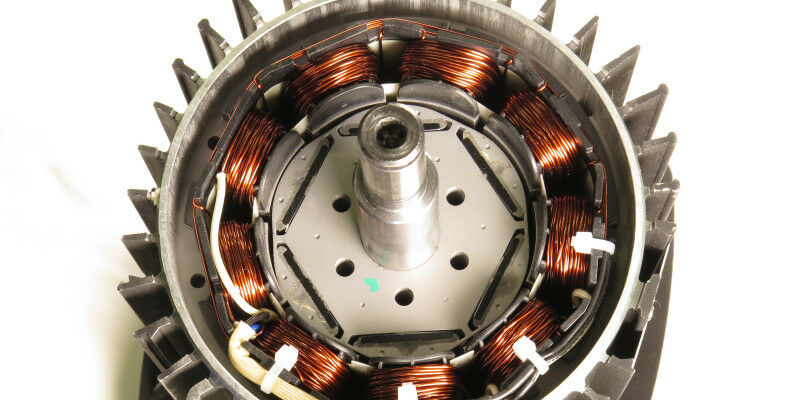
Figure 1: Electric motor.
By Peter Gangl - In order to design machines which - depending on the concrete application - perform as well as possible, mathematical methods for the optimization of the geometry of the machines can be used. Nowadays, electrical machines are ubiquitous in our lives. In order to design machines which - depending on the concrete application - perform as well as possible, mathematical methods for the optimization of the geometry of the machines can be used. These methods can yield designs which one might not have expected beforehand. Electrical machines have become an integral part of our everyday lives. Whenever we put a plug into a power socket and thereby initiate the movement of a device - be it a blender, a vacuum cleaner or a washing machine - there is an electric motor involved (see Figure 1) which converts electrical energy into mechanical energy. Electric motors are almost indispensable also in industrial applications as industrial electric motors consume more than 40% of the electrical energy produced worldwide.
TO READ THIS ARTICLE, CREATE YOUR ACCOUNT
And extend your reading, free of charge and with no commitment.