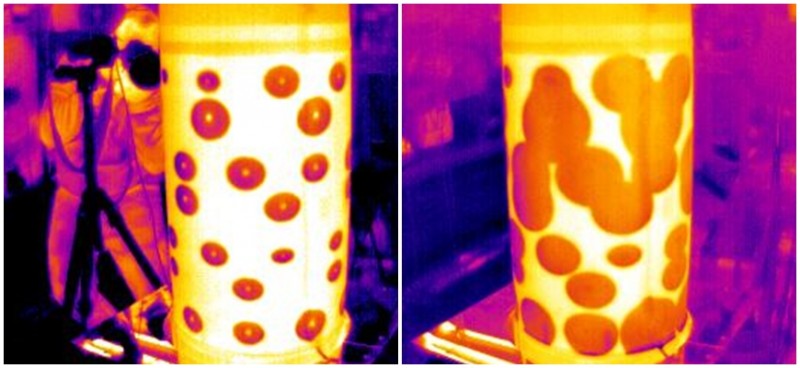
Empa’s sweat torso ejects precisely defined quantities of liquid through a large number of small nozzles during the experiments.
Empa's sweat torso now meets the ISO standard. How protective clothing affects the human body can be investigated in future with Empa's torso in a standardized way. If a firefighter enters a burning building in full gear, the heat of the fire must not harm him. Appropriate protective clothing protects the wearer from burns, but at the same time it must enable him/her to compensate for the high ambient temperatures by sweating. The human skin produces around two liters of sweat per hour under these extreme conditions. However, if the evaporated sweat accumulates inside the clothing, this will jeopardize the cooling effect. At the same time, the clothing protects the wearer less effectively due to the increased thermal conductivity of the trapped water vapor.
TO READ THIS ARTICLE, CREATE YOUR ACCOUNT
And extend your reading, free of charge and with no commitment.