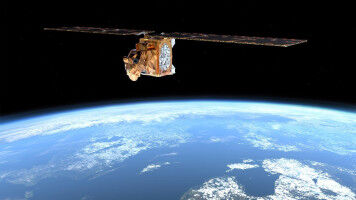
Zero gravity graphene promises success in space
In a series of experiments conducted last month, Cambridge researchers experienced weightlessness testing graphene's application in space. This is the first time that graphene has been tested in space-like applications. Andrea Ferrari Working as part of a collaboration between the Graphene Flagship and the European Space Agency, researchers from the Cambridge Graphene Centre tested graphene in microgravity conditions for the first time while aboard a parabolic flight - often referred to as the 'vomit comet'. The experiments they conducted were designed to test graphene's potential in cooling systems for satellites. "One of graphene's potential uses, recognised early on, is space applications, and this is the first time that graphene has been tested in space-like applications," said Professor Andrea Ferrari, who is Director of the Cambridge Graphene Centre, as well as Science and Technology Officer and Chair of the Management Panel for the Graphene Flagship. Graphene - a form of carbon just a single atom thick - has a unique combination of properties that make it useful for applications from flexible electronics and fast data communication, to enhanced structural materials and water treatments. It is highly electrically and thermally conductive, as well as strong and flexible.