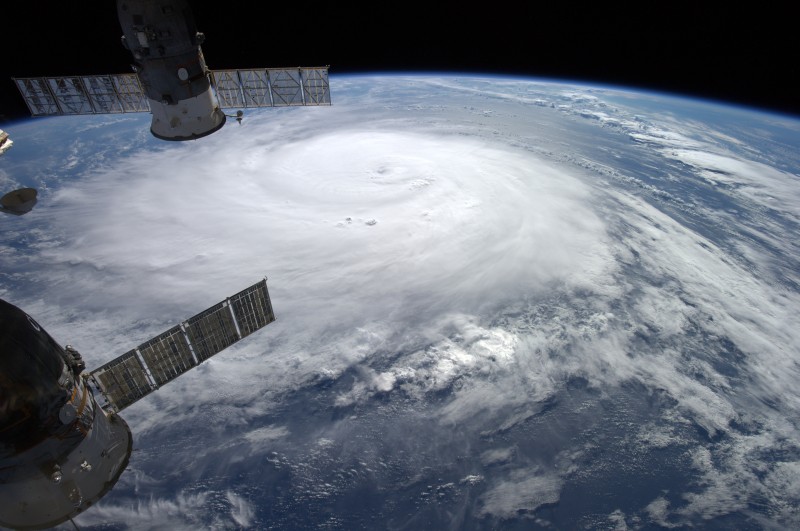
Hurricane ’Gonzalo’ viewed from the International Space Station ISS on October 16, 2014.
Image credit: Alexander Gerst/ESA/NASA
Tropical storms that move poleward influence the weather in Europe much more than previously supposed. A study from the Mobiliar Lab for Natural Risks at the University of Bern shows that the probability of heavy rainfall is twice as high when mid-latitude weather is disrupted by cyclones. These findings could ensure better extreme weather forecasts in the future. In mid-October 2017, "Ophelia" paralyzed public life in large parts of Ireland: Squalls with heavy rain and wind speeds of up to 150 kph caused huge amounts of damage and made schools shut down. "Ophelia" was one of the strongest hurricanes ever observed so far east in the Atlantic. Tropical storms, which usually devastate the Caribbean, moving on to the mid-latitudes is actually nothing unusual. "Nearly half of these storms move away from tropics and can then affect the weather in Europe," says Olivia Romppainen, Professor for Climate Impact Research at the University of Bern, and Co-Director of the Mobiliar Lab for Natural Risks.
TO READ THIS ARTICLE, CREATE YOUR ACCOUNT
And extend your reading, free of charge and with no commitment.