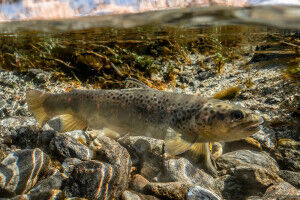
High-intensity light makes fruit flies take longer siestas and delay their evening activity. Photo Katja Schulz from Washington, D. C., USA - Drosophilid Fly , CC BY 2.0 , Link
Insects and mammals have special sensors for different light intensities. These sensors selectively influence the circadian clocks and thereby control daily activity patterns. Increasing sunlight intensity extends the sleep duration and results in a longer midday siesta which delays the resumption of activity to the evening. What sounds like an analysis of the effects of the unusually hot summer of 2018 is actually the result of the latest research conducted by scientists from Würzburg and the USA. The neurobiologists studied the impact of different light intensities on the circadian rhythm of Drosophila , also known as the common fruit fly. Research in the Nobel Laureate's lab "We were able to show that low, medium and high intensity light synchronizes the circadian clock in the fly's brain to the 24-hour day," Charlotte Helfrich-Förster describes the central conclusion of the paper in a nutshell. The professor holds the Chair of Neurobiology and Genetics at the University of Würzburg.
TO READ THIS ARTICLE, CREATE YOUR ACCOUNT
And extend your reading, free of charge and with no commitment.