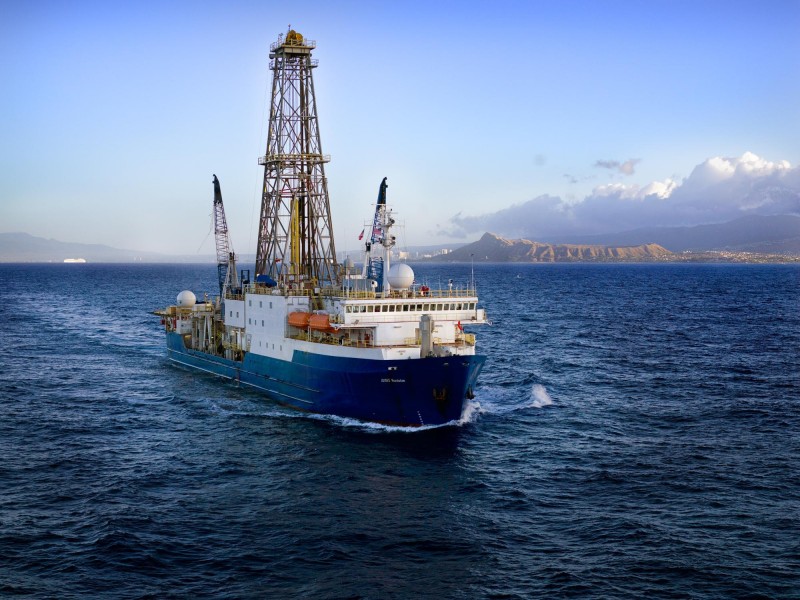
 Researchers from the University of Bern analysed a 169-metre-long sediment core collected at the bottom of the Southern Ocean by the research vessel JOIDES Resolution, in conjunction with the International Ocean Drilling Project (IODP).
Over the last million years, ice ages have intensified and lengthened. According to a study led by the University of Bern, this previously unexplained climate transition coincides with a diminution of the mixing between deep and surface waters in the Southern Ocean. The study confirms that the Antarctic region plays a crucial role during periods of climate change. An analysis of marine sediments collected at a depth of more than 2 km has just provided an answer to one of the riddles of the earth's climate history: the mid-Pleistocene transition, which began around one million years ago. Thereafter, ice ages lengthened and intensified, and the frequency of their cycles increased from 40,000 years to 100,000 years. The study, which appeared , shows one of the keys to this phenomenon lies in the deep waters of the Southern Ocean surrounding Antarctica. Ocean waters contain 60 times more carbon than the atmosphere.
TO READ THIS ARTICLE, CREATE YOUR ACCOUNT
And extend your reading, free of charge and with no commitment.
Your Benefits
- Access to all content
- Receive newsmails for news and jobs
- Post ads