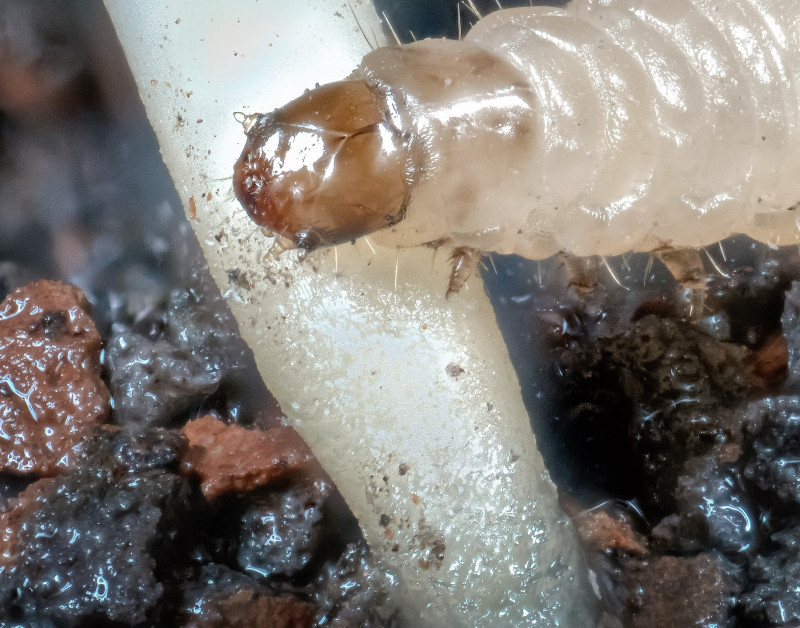
The western corn rootworm is an important maize pest in the US. It is also invasive in Europe. The larvae of the rootworm use plant defense substances as self-defense against biological control agents such as entomopathogenic nematodes. Image: Cyril Hertz and Lingfei Hu, University of Bern
The western corn rootworm is an important maize pest in the US. It is also invasive in Europe. The larvae of the rootworm use plant defense substances as self-defense against biological control agents such as entomopathogenic nematodes. Image: Cyril Hertz and Lingfei Hu, University of Bern - In a new study, researchers from the University of Bern developed an experimental approach that may be used to improve a wide range of organisms that rely on microbial symbionts to control insect pests. This approach opens up a new avenue for the improvement of biological control strategies towards a more sustainable, pesticide-free agriculture. The western corn rootworm causes economic losses of over 2 billion US dollars in maize cultivation and is thus a serious agricultural pest. Over the past decade, scientists at the Institute of Plant Sciences (IPS) at the University of Bern have unraveled the mechanisms that explain the success of this pest, including how it resists the attack of biological control agents such as entomopathogenic nematodes (parasitic roundworms), and their associated bacterial partners.
TO READ THIS ARTICLE, CREATE YOUR ACCOUNT
And extend your reading, free of charge and with no commitment.