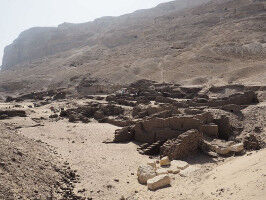
African trade routes sketched out by mediaeval beads
An analysis of archaeological glass beads discovered in sub-Saharan West Africa brings to light the full extent of the region's international trade routes between the 7th and 13th centuries. The origin of glass beads dates back to early ancient times. The chemical composition of the beads and their morphological and technical characteristics can reveal where they come from; this information can then be used to reconstruct the trade channels between glass production areas and the sites where the beads were used at different times. Archaeologists from the University of Geneva , working in partnership with the Institut de Recherche sur les Archéomatériaux at the Centre Ernest-Babelon in Orléans, France, analysed 16 archaeological glass beads found at three rural sites in Mali and Senegal from between the 7th and 13th centuries AD. In the journal Plos One , the scientists demonstrate that the glass they are made of probably came from Egypt, the Levantine coast and the Middle East. The results show that international trade linking Africa to Europe and Asia during the development of the large West African state configurations did not stop at the great urban centres located along the Niger River: it also connected with local and regional trade. In this way, an extensive network including sub-Saharan rural areas and trans-Saharan trade routes took shape.