(Image: Pixabay CC0)
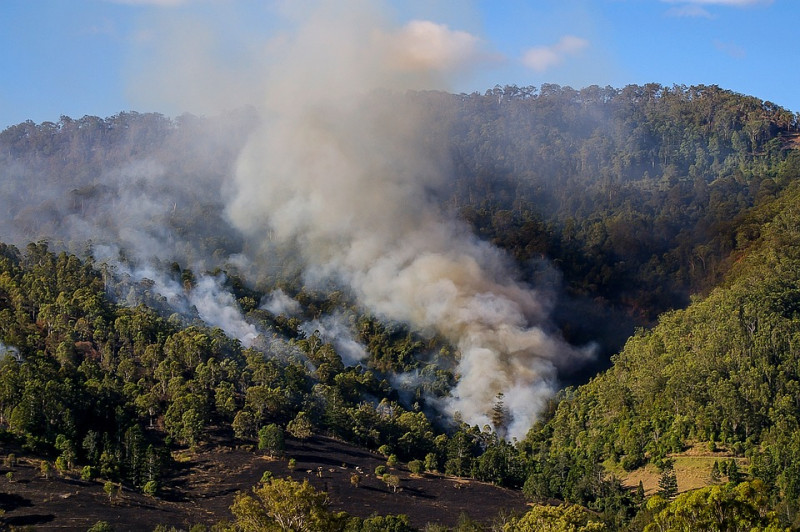
(Image: Pixabay CC0) - Study explores role of human induced climate change in the 2019-2020 South-Eastern Australian bushfire season. The World Weather Attribution (WWA) initiative has released the first analysis of the role climate change played in the 2019/2020 bushfire season in South-Eastern Australia, which showed that the risk of intense fire weather has increased by 30% since 1900 as a result of anthropogenic climate change. Department of Engineering Science researchers Professor David Wallom , Dr Sarah Sparrow and Sihan Li of the Oxford e-Research Centre in the Department of Engineering Science are co-authors on the study, which made use of data provided by the weather@home model in Climate prediction .net , a volunteer computing, climate modelling project in which the Oxford e-Research Centre partners. Record warmth and dryness in 2019/20 led to severe wildfire outbreaks across Australia that caused up to 50 million acres being burned, leading to the deaths of 34 people, the destruction of thousands of buildings and the loss of millions of animals. The study questioned whether and to what extent human-induced climate change altered the likelihood and intensity of fire weather risk, as well as two key components of fire weather (high temperatures and lack of rainfall). The study used an established protocol to compute change in probability of a Fire Weather Index (FWI), extreme heat or drought as high as observed in 2019/20, compared to the year 1900 in climate models and observations.
TO READ THIS ARTICLE, CREATE YOUR ACCOUNT
And extend your reading, free of charge and with no commitment.