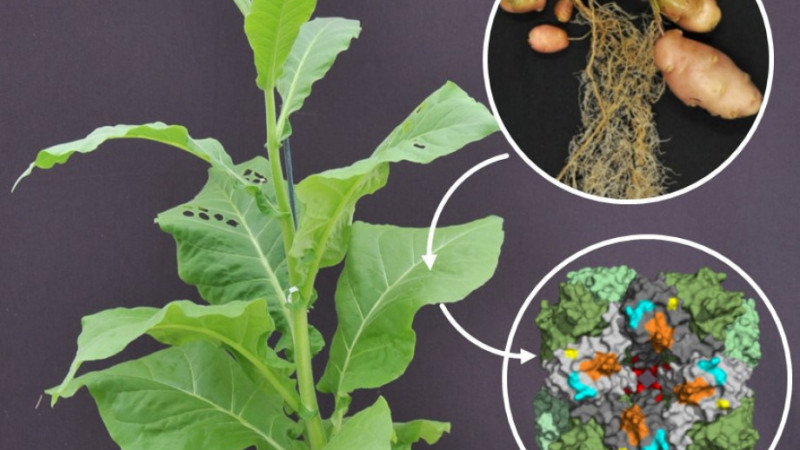
Using a chloroplast SynBio approach the researchers deciphered how the small subunit influences potato Rubisco catalysis. Image: Elena Martin-Avila, et al
Using a chloroplast SynBio approach the researchers deciphered how the small subunit influences potato Rubisco catalysis. Image: Elena Martin-Avila, et al - Research led by scientists at The Australian National University (ANU) could lead to major improvements in crop production. The study shows a new way to help study and ramp up photosynthesis. The breakthrough is based on revisiting an original, billion-year-old strategy in plants. It looks specifically at rubisco activity - a crucial part of the process according to co-author Professor Spencer Whitney from the ARC Centre of Excellence for Translational Photosynthesis at ANU. "Rubisco is an enzyme involved in the first step of carbon fixation - it starts the conversion of carbon dioxide into plant sugars," he said. "But compared to other enzymes, rubisco is considered a slow, inefficient catalyst.
TO READ THIS ARTICLE, CREATE YOUR ACCOUNT
And extend your reading, free of charge and with no commitment.