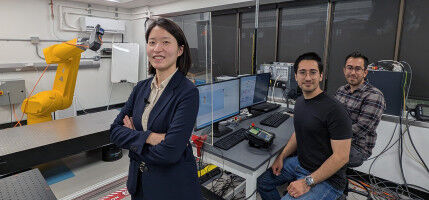
Wall (r) and Biehler at work on their virtual lung model. Image: A. Kerler / bavariaone
Wall (r) and Biehler at work on their virtual lung model. Image: A. Kerler / bavariaone - Computational model of the lung could significantly reduce the number of deaths from Covid-19 and ARDS Computer model enables protective ventilation The use of mechanical ventilation can save lives - and not just for COVID-19 patients who develop severe respiratory problems. But at the same time, the ventilation pressure puts immense stress on delicate lung tissue. Especially for patients with preexisting lung damage, the use of ventilators can prove deadly. A computational lung model that's been developed by the Technical University of Munich (TUM) can be used to reduce damage caused by mechanical ventilation - and could increase survival rates for patients significantly. For patients suffering from acute lung failure (Acute Respiratory Distress Syndrome, ARDS), mechanical ventilation is a lifesaving treatment. But the situation is paradoxical: at the same time that medical teams employ ventilation to keep a patient's lungs open to ensure the continuous exchange of oxygen and CO2, the ventilation pressure can cause such severe damage to the lungs that it results in the patient's death.
TO READ THIS ARTICLE, CREATE YOUR ACCOUNT
And extend your reading, free of charge and with no commitment.