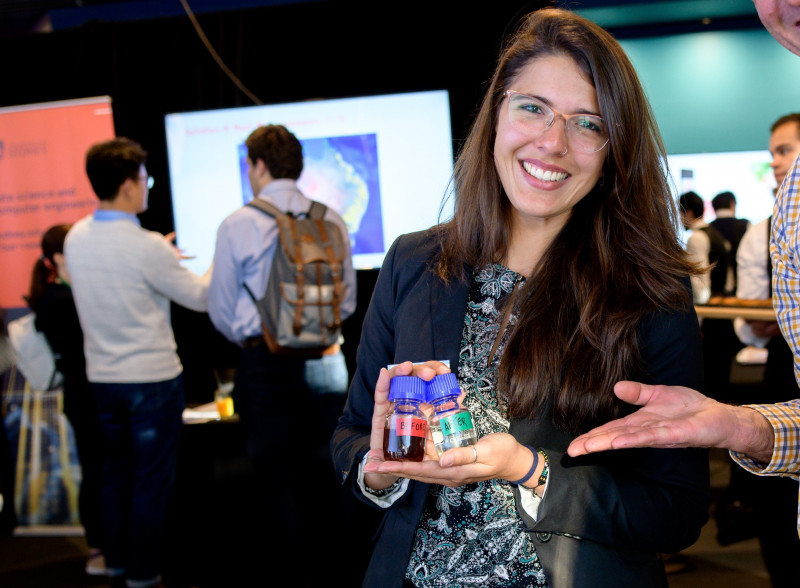
Julia Ciarlini Jungers Soares showcasing her work at the University of Sydney. The researchers used an advanced oxidation process that eliminated stubborn organic aqueous pollutants. Credit: Julia Ciarlini Jungers Soares, University of Sydney
Julia Ciarlini Jungers Soares showcasing her work at the University of Sydney. The researchers used an advanced oxidation process that eliminated stubborn organic aqueous pollutants. Credit: Julia Ciarlini Jungers Soares, University of Sydney - University of Sydney engineers have used electricity to clean up heavily polluted industrial wastewater. They hope the findings will help wineries, pharmaceutical manufacturers and other industries that must comply with strict wastewater regulations. A team of engineers may be one step closer to cleaning up heavily contaminated industrial wastewater streams. Researchers from the School of Chemical and Biomolecular Engineering developed an electrochemical oxidation process with the aim of cleaning up complex wastewater that contained a toxic cocktail of chemical pollutants. "Our study, published in Algal Research , involved industrial wastewater that had been heavily contaminated with a cocktail of organic and inorganic species during a biofuel production process", said Julia Ciarlini Jungers Soares , who is completing a PhD in Chemical and Biomolecular Engineering under the supervision of Dr Alejandro Montoya. The wastewater, which contained carbon, nitrogen and phosphorus, was generated in a pilot plant, designed by the team for the production of biofuels using naturally abundant microalgae.
TO READ THIS ARTICLE, CREATE YOUR ACCOUNT
And extend your reading, free of charge and with no commitment.