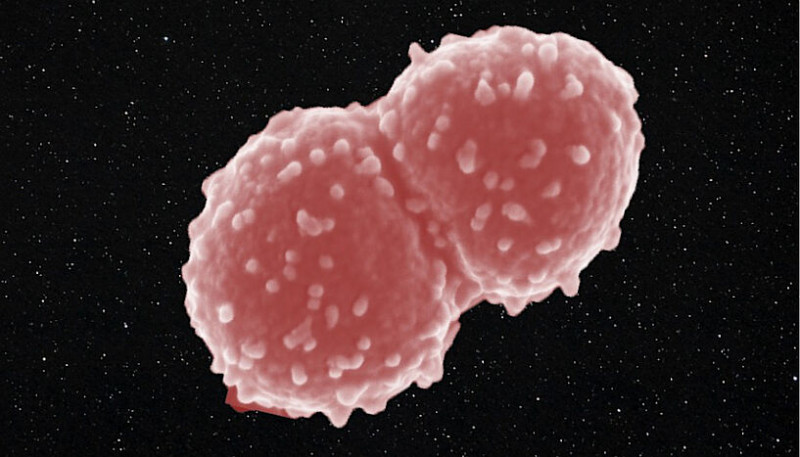
 Space traveler Deinococcus radiodurans recovered after 1 year of exposure to low Earth orbit (LEO) outside the International Space Station during the Tanpopo space Mission.
Space traveler Deinococcus radiodurans recovered after 1 year of exposure to low Earth orbit (LEO) outside the International Space Station during the Tanpopo space Mission. Tetyana Milojevic) - How extremophilic bacteria survive in space for one year Galactic cosmic and solar UV radiation, extreme vacuum, temperature fluctuations: how can microbes exposed to these challenges in space survive? An international team around Space Biochemistry group at the University of Vienna investigated how the space-surviving microbes could physically survive the transfer from one celestial body to another. Their study provides a deeper understanding of molecular mechanisms of microbial survivability in outer space. The results are published in the high-impact journal "Microbiome". Since the dawn of space exploration, humankind has been fascinated by survival of terrestrial life in outer space. Outer space is a hostile environment for any form of life, but some extraordinarily resistant microorganisms can survive. Such extremophiles may migrate between planets and distribute life across the Universe, underlying the panspermia hypothesis or interplanetary transfer of life.
TO READ THIS ARTICLE, CREATE YOUR ACCOUNT
And extend your reading, free of charge and with no commitment.
Your Benefits
- Access to all content
- Receive newsmails for news and jobs
- Post ads