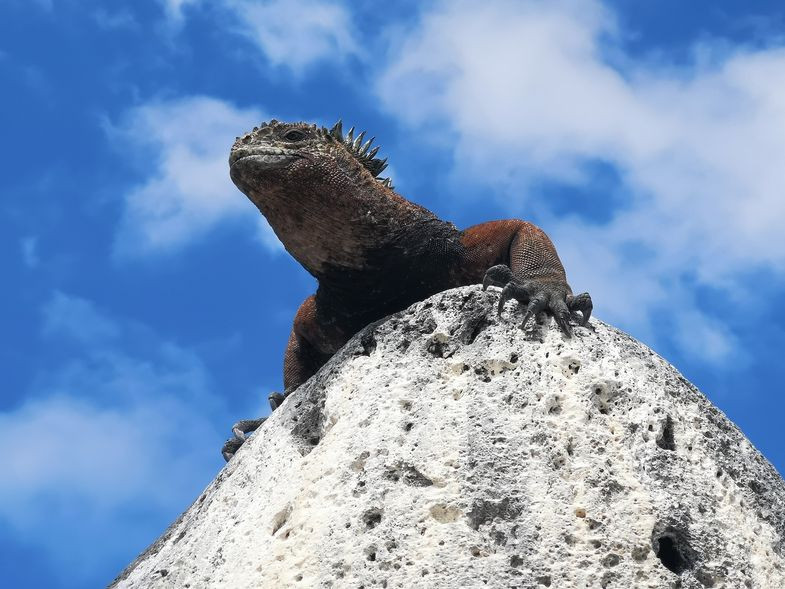
Endemic to the Galapagos Islands, marine iguanas are at risk of extinction. Photo: Iguanas from Above project, Amy MacLeod
Endemic to the Galapagos Islands, marine iguanas are at risk of extinction. Photo: Iguanas from Above project, Amy MacLeod A research team led by zoologist Dr Amy MacLeod has been using drones to count marine lizards on the Galapagos Islands. The aim of the Leipzig University project is to determine the colony sizes of this vulnerable species and, with the help of volunteers, to precisely locate them - in order to ultimately be able to better protect the iguanas. A recent study on marine iguanas also shows that many of the proteins found in the secretions of special glands in these animals are part of their immune system. Professor Sebastian Steinfartz, who holds the professorship for Molecular Evolution and Systematics of Animals at Leipzig University, is one of the principal scientists involved in this study. Over the past few months, Dr Amy MacLeod and her expedition team have been using camera drones on two islands of the Galapagos archipelago to collect extensive aerial footage, specifically of the islands' coastlines. For it is here, hidden away on stony and very rugged terrain, that the marine iguanas live.
TO READ THIS ARTICLE, CREATE YOUR ACCOUNT
And extend your reading, free of charge and with no commitment.