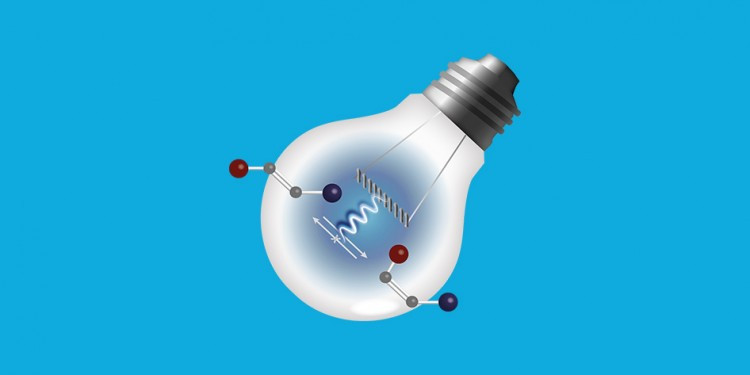
 Light-driven flip of alkene geometry
Light-driven flip of alkene geometry © Ryan Gilmour Chemists at the University of Münster develop a bioinspired strategy for the controlled synthesis of polyenes / Study published in "Science" They occur in nature, are reactive and play a role in many biological processes: polyenes. It is no wonder that chemists have for a long time been interested in efficiently constructing these compounds - not least in order to be able to use them for future biomedical applications. However, such designs are currently neither simple nor inexpensive and present organic chemists with major challenges. Scientists at the University of Münster headed by Prof. Ryan Gilmour have now found a bio-inspired solution to the problem: They succeeded in constructing complex polyenes such as retinoic acid from simple, geometrically well-defined alkene building blocks. To do this, the scientists used small molecules as "antennas" which they excited with light, thereby enabling difficult chemical reactions to proceed via a process known as "Energy Transfer Catalysis". "The process provides us with a light-driven, operationally simple solution to a conundrum that has occupied us for a long time," says Dr. John J. Molloy, the first author of the study. The new possibility of forming complex polyenes could facilitate the exploration of these bioactive materials for drug discovery.
TO READ THIS ARTICLE, CREATE YOUR ACCOUNT
And extend your reading, free of charge and with no commitment.
Your Benefits
- Access to all content
- Receive newsmails for news and jobs
- Post ads