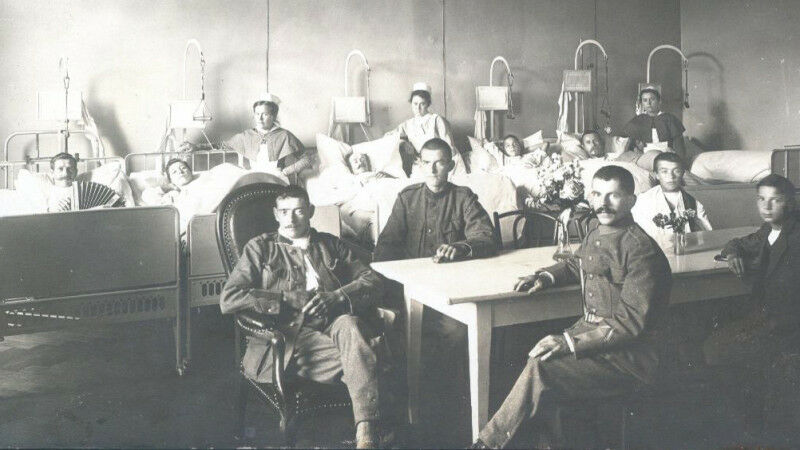
Members of the army during the Spanish flu in Olten hospital. (Foto: A. & G. Zimmermann, Genf. S/w Abzug o. D. [1918]. Aus dem Nachlass Leonie Moser, Archiv für Medizingeschichte, Universität Zürich)
Members of the army during the Spanish flu in Olten hospital. (Foto: A. & G. Zimmermann, Genf. S/w Abzug o. D. Aus dem Nachlass Leonie Moser, Archiv für Medizingeschichte, Universität Zürich) - In the event of a pandemic, delayed reactions and a decentralized approach by the authorities at the start of a follow-up wave can lead to longer-lasting, more severe and more fatal consequences, researchers from the universities of Zurich and Toronto have found. The interdisciplinary team compared the Spanish flu of 1918 and 1919 in the Canton of Bern with the coronavirus pandemic of 2020. The Spanish flu was the greatest demographic catastrophe in Switzerland's recent history, causing approximately 25,000 deaths in the country during 1918 and 1919. In the wake of the current coronavirus pandemic, there has been increased public and scientific interest in the events of that time.
TO READ THIS ARTICLE, CREATE YOUR ACCOUNT
And extend your reading, free of charge and with no commitment.