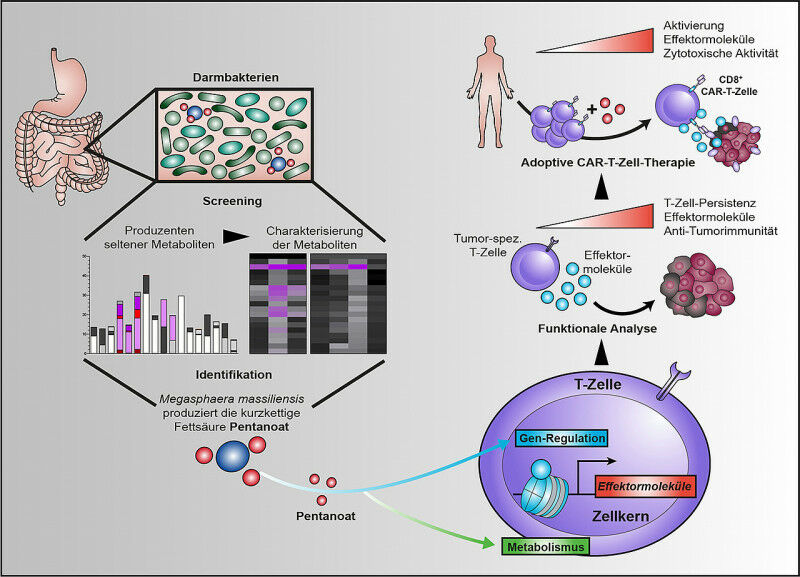
The bacterium Megasphaera massiliensis produces the short-chain fatty acid pentanoate in the human digestive tract. It is capable of altering certain cells of the immune system so that they can fight tumours more effectively. This also applies to CAR-T cells. (Image: Maik Luu)
The bacterium Megasphaera massiliensis produces the short-chain fatty acid pentanoate in the human digestive tract. It is capable of altering certain cells of the immune system so that they can fight tumours more effectively. This also applies to CAR-T cells. (Image: Maik Luu) - Certain metabolites of bacteria from the intestine make immune cells more aggressive as a new study conducted by scientists from Würzburg and Marburg reveals. The findings could help improve cancer therapies. It is believed to be involved in the development of chronic inflammatory intestinal diseases, to trigger diabetes, to be responsible for obesity, even neurological diseases such as multiple sclerosis and Parkinson's could have their causes here - not to mention depressions and autistic disorders. We are talking about the microbiome - the vast collection of bacteria in the human gut.
TO READ THIS ARTICLE, CREATE YOUR ACCOUNT
And extend your reading, free of charge and with no commitment.