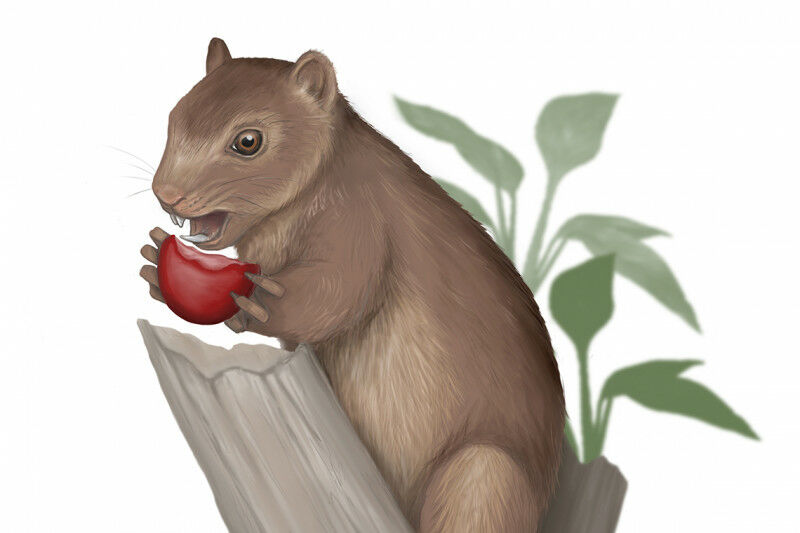
The fossilized teeth of Microsyops latidens show evidence of cavities - likely the result of a fruit-heavy diet - that are believed to be the oldest ever found in a mammal (illustration by Ann Sanderson)
The fossilized teeth of Microsyops latidens show evidence of cavities - likely the result of a fruit-heavy diet - that are believed to be the oldest ever found in a mammal (illustration by Ann Sanderson) - Researchers at the University of Toronto have discovered what are believed to be the oldest known cavities found in a mammal - the likely result of a diet that included eating fruit. The cavities were discovered in fossils of Microsyops latidens, a pointy-snouted animal - no bigger than a racoon - that was part of a group of mammals known as stem primates. It walked the earth for about 500,000 years before going extinct around 54 million years ago. Keegan Selig - "These fossils were sitting around for 54 million years, and a lot can happen in that time," says Keegan Selig , lead author of the study who recently completed his PhD in Professor Mary Silcox 's lab in the department of anthropology at University of Toronto Scarborough. "I think most people assumed these holes were some kind of damage that happened over time, but they always occurred in the same part of the tooth and consistently had this smooth, rounded curve to them." Very few fossils of M. latidens's body have been found, but a large sample of fossilized teeth have been unearthed over the years in Wyoming's southern Bighorn Basin. While they were first dug up in the 1970s and have been studied extensively since, Selig is the first to identify little holes in the fossilized teeth as being cavities. Cavities form when bacteria in the mouth turns foods containing carbohydrates into acids. These acids erode tooth enamel (the hard protective coating on the tooth) before eating away at dentin, the softer part of the tooth beneath the enamel.
TO READ THIS ARTICLE, CREATE YOUR ACCOUNT
And extend your reading, free of charge and with no commitment.