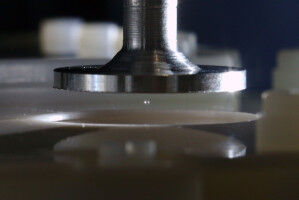
The coating of the electrodes is one of many process steps in complex battery cell production.
The coating of the electrodes is one of many process steps in complex battery cell production. WWU - MEET Research on manufacturing battery cells is gaining momentum - and there is a strong need, considering the future demand for energy storage: For the year 2030, global production of rechargeable batteries will double from today's 750 gigawatt hours (GWh) per year to 1,500 GWh. A recently published review article in the magazine "Nature Energy" on cell production of various battery types suggests that the currently established lithium-ion batteries (LIB) dominate the market of rechargeable high-energy batteries in the coming years. Alternative battery technologies, in particular solid batteries, but also lithium-sulphur or lithium-air batteries are being researched intensively, but production on an industrial large scale is not yet taking place. Based on currently numerous emerging production capacities for LIBs, a switch to so-called post-lithium-ion batteries (PLIBs) with new process technologies, manufacturing environments and skills would require billion-dollar investments. "Lithium-ion technology is expected to still dominate the market for high-energy rechargeable batteries over the next 10 years. It combines advantageous properties such as energy, power density, safety, durability and low costs in one.
TO READ THIS ARTICLE, CREATE YOUR ACCOUNT
And extend your reading, free of charge and with no commitment.
Your Benefits
- Access to all content
- Receive newsmails for news and jobs
- Post ads