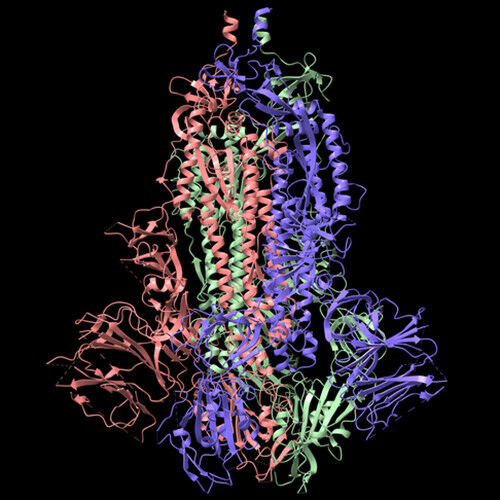
Stock illustration image of the SARS-CoV-2 spike glycoprotein
Stock illustration image of the SARS-CoV-2 spike glycoprotein - Evidence is emerging that vitamin D - and possibly vitamins K and A - might help combat COVID-19. A new study from the University of Bristol published in the journal of the German Chemical Society Angewandte Chemie has shown how they - and other antiviral drugs - might work. The research indicates that these dietary supplements and compounds could bind to the viral spike protein and so might reduce SARS-CoV-2 infectivity. In contrast, cholesterol may increase infectivity, which could explain why having high cholesterol is considered a risk factor for serious disease. Recently, Bristol researchers showed that linoleic acid binds to a specific site in the viral spike protein, and that by doing so, it locks the spike into a closed, less infective form. Now, a research team has used computational methods to search for other compounds that might have the same effect, as potential treatments. They hope to prevent human cells becoming infected by preventing the viral spike protein from opening enough to interact with a human protein (ACE2).
TO READ THIS ARTICLE, CREATE YOUR ACCOUNT
And extend your reading, free of charge and with no commitment.