Researchers find evidence of successful hunt and exploitation of range of animals in Germany
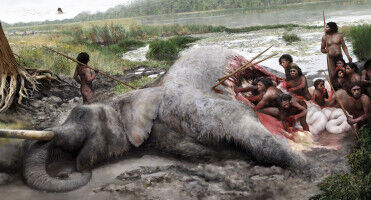
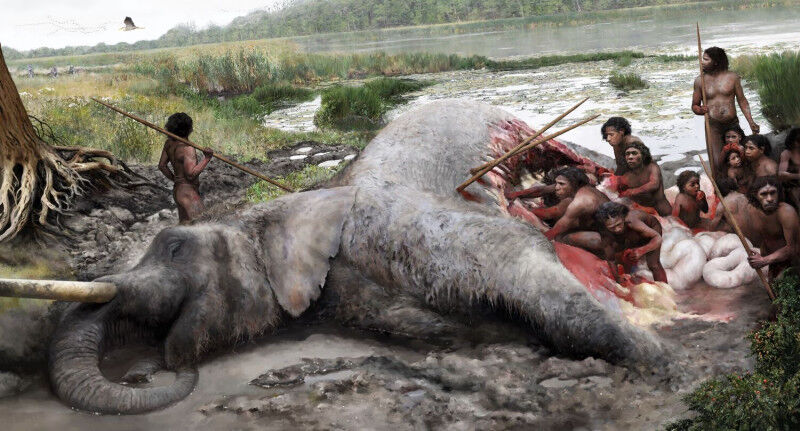
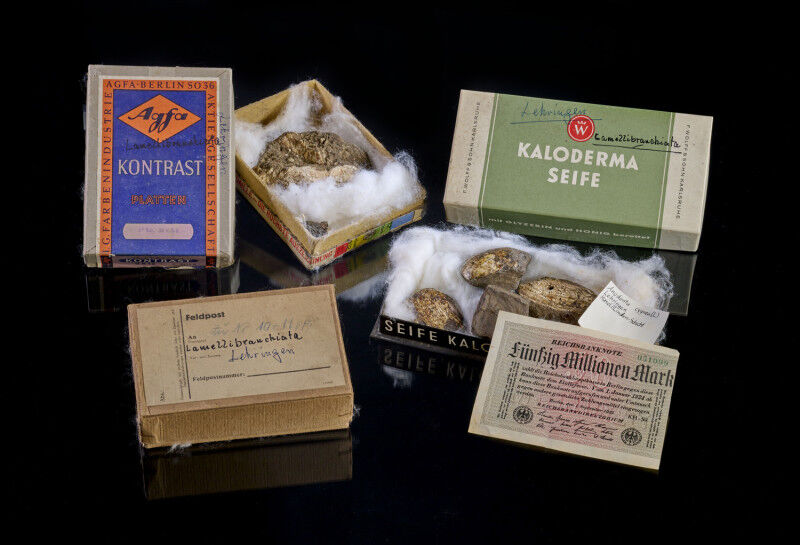
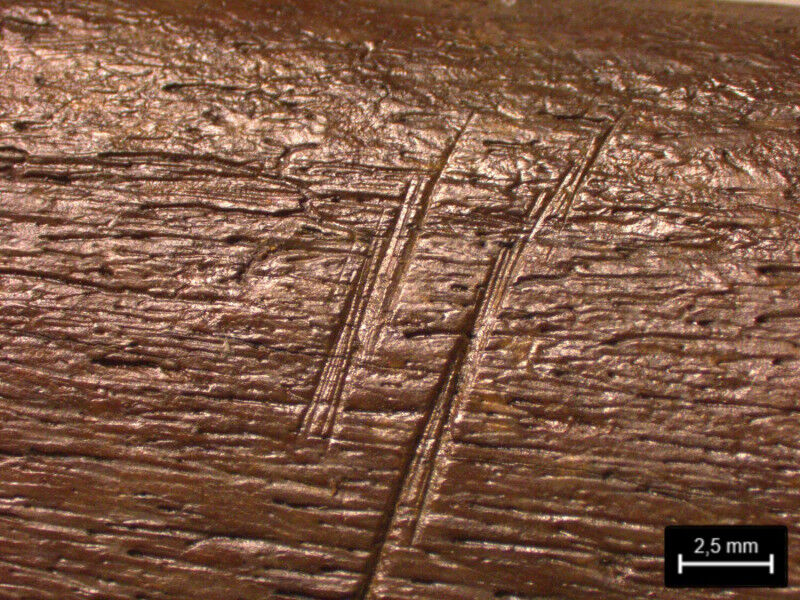
In 1948, a group of amateurs led by a local headmaster in Lehringen, Germany, uncovered the skeleton of a straight-tusked elephant - the largest land mammal known to have roamed Europe - in 125,000-year-old sediments from the last interglacial period. There was an important surprise in this find: between the ribs, the team discovered a complete wooden spear belonging to Neanderthal hunters. Over the years, this was interpreted as either direct evidence of hunting or simply coincidental positioning of the bones and spear. This led a team at the University of Göttingen and the Lower Saxony State Office for Heritage (NLD) to carry out the first detailed analysis of the site to investigate the role of Neanderthals there. The researchers identified numerous cut marks preserved on the ribs and vertebrae which proved that Neanderthals butchered the elephant on site. This means that the find of an elephant skeleton with a thrusting spear represents the most convincing evidence to date of a successful elephant hunt by Neanderthals. The results were published in Scientific Reports.
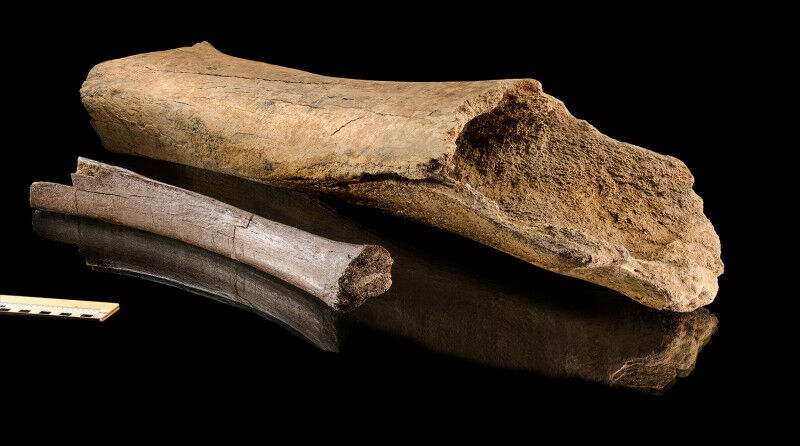
The location of the butchering marks on the ribs shows that Neanderthals cut open the elephant’s chest cavity, removing the organs to obtain an abundant supply of food. The male elephant was around 30 years old, consisted of around 3,500 kilograms of meat, organs and fat, which could have fed a large group for a long period of time. The elephant is considered the most relevant signifier of previous warm periods, with slightly higher average annual temperatures than today and dense deciduous forests. In addition, plant remains and around 2,000 bones from 16 animal species, including fish, birds, and turtles, were found in Lehringen on the shore of the former lake. The research team also discovered evidence of the butchering of an aurochs - an extinct ancestor of wild cattle. With a shoulder height of up to 1.8 metres and massive, elongated, and broad horns, it was certainly also dangerous - but rich in meat. Evidence of cut and impact marks on brown bear bones, on the other hand, indicates that also its bone marrow was extracted. And the team identified marks on beaver bones, showing that both meat and fur was used.
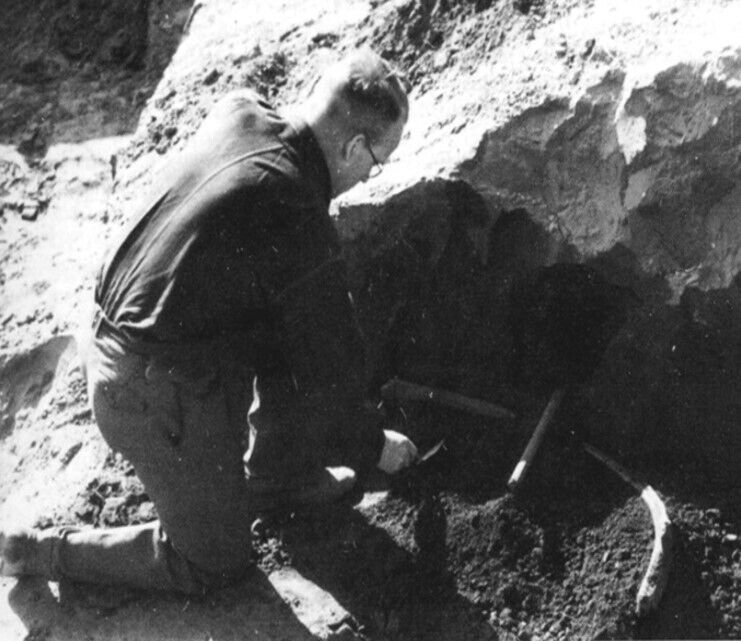
Professor Thomas Terberger, at the NLD and Göttingen University’s Department of Prehistory and Early History, is enthusiastic: "The finds, which were recovered under difficult conditions in 1948, provide a crucial building block for an up-to-date understanding of Neanderthals, who were already hunting strategically with the same level of skill as anatomically modern humans were 125,000 years ago."
The current investigation is funded by the Lower Saxony Ministry of Science and Culture. It is being carried out in cooperation with the Historical Museum Domherrenhaus in Verden and the initiative "Climate Change and Early Humans in the North", which is funded by the state of Lower Saxony in Germany to research Lower Saxony’s Ice Age cultural heritage. www.ccehn.de.
Original publication: Ivo Verheijen et al., "Faunal exploitation of the elephant hunting site of Lehringen, Germany, 125,000 years ago". Scientific Reports 2026, DOI: 10.1038/s41598-026-42538-4