Research team finds evidence of Neanderthal hunting success at Lehringen
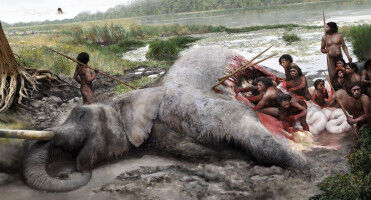
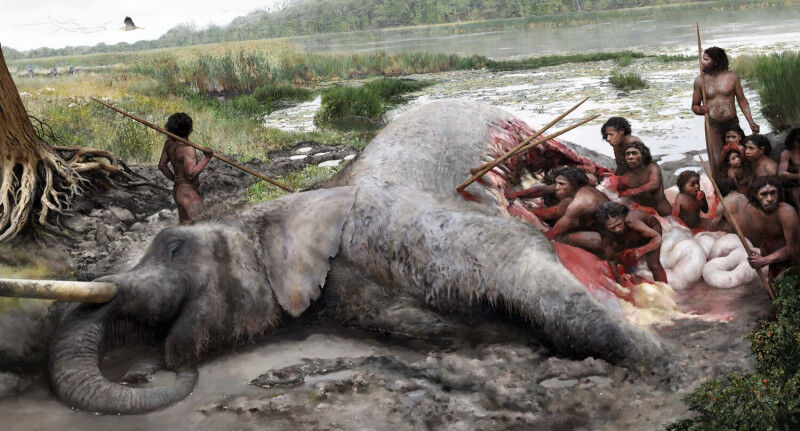
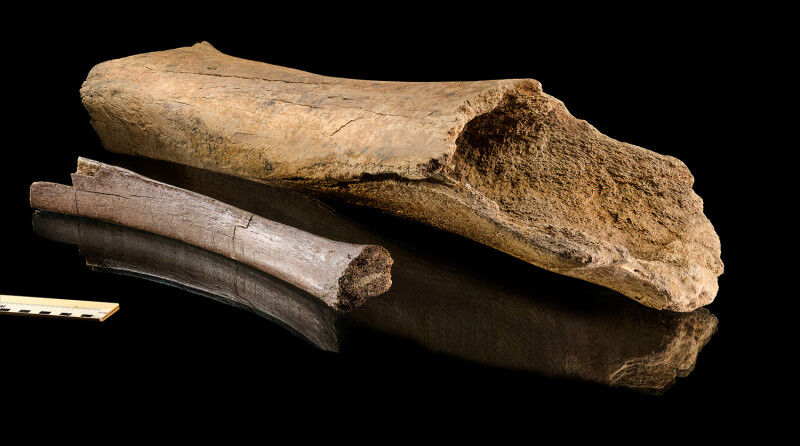
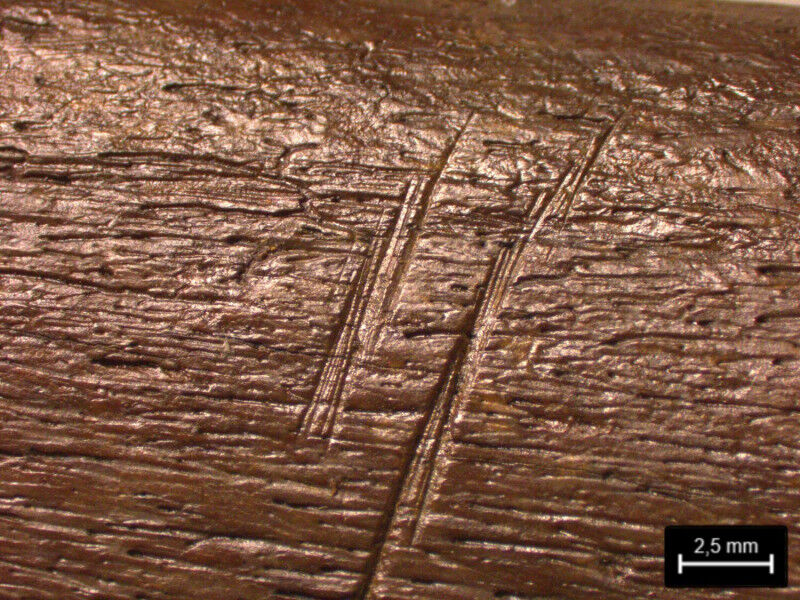
A marl pit near Lehringen in Lower Saxony in 1948: a school principal and helpers uncover the skeleton of a forest elephant in 125,000-year-old deposits from the last interglacial period. Little did he know that he was on the trail of a sensation: between the ribs, the team discovered a complete Neanderthal wooden lance. After the discovery, many researchers agree that the joint discovery of the skeleton and lance is evidence of a successful big game hunt. Later, there are doubts as to whether an original situation has been preserved. A team from the University of Göttingen and the Lower Saxony State Office for the Preservation of Monuments (NLD) has now systematically investigated the role of the Neanderthal in the deposits for the first time. Numerous cut marks on the surviving ribs prove that Neanderthals dismembered the elephant on site. It is therefore likely that the lance between the ribs is evidence of a hunting event. The results were published in the journal Scientific Reports

According to the position of the incision marks, the Neanderthals opened the elephant’s abdominal cavity, removed the organs and fed themselves plenty of food. With 3,500 kilograms of meat, organs and fat, the 30-year-old bull was able to feed a large group over a long period of time. The elephant is considered the most prominent representative of past warm periods, with slightly higher average annual temperatures than today and dense deciduous forests. In addition, plant remains and around 2,000 bones from 16 animal species, including fish, birds and turtles, were found on a former lake shore in Lehringen. The research team also discovered evidence of the dismemberment of an aurochs. With a height at the withers of up to 1.8 meters, it was also dangerous and rich in meat. Traces of carving on the bones of a brown bear, on the other hand, indicate the use of its bone marrow. And on beaver bones, the team found cut marks from meat and fur production
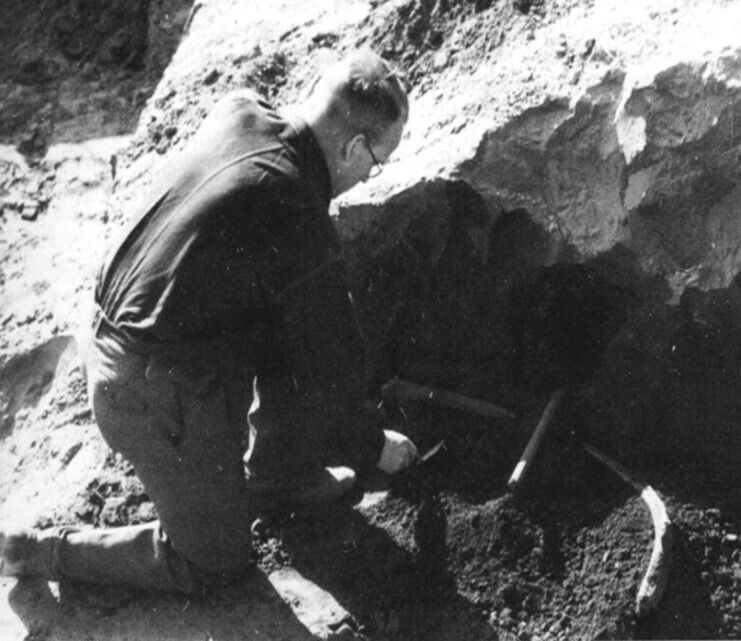
Thomas Terberger, project manager at the NLD and the Department of Prehistory and Early History at the University of Göttingen, is delighted: "The finds, recovered under difficult conditions in 1948, provide a crucial building block for a modern understanding of Neanderthals, who 125,000 years ago were already a hunting strategist on a par with anatomically modern humans who appeared later."
The current study is financially supported by the Lower Saxony Ministry of Science and Culture. It is being carried out in cooperation with the Museum Domherrenhaus e.V. in Verden and the "Climate Change and Early Man in the North" initiative funded by the state of Lower Saxony, in which the University of Göttingen and the NLD, among others, are participating in order to research Lower Saxony’s Ice Age cultural heritage. More information can be found at www.ccehn.de
Original publication: I. Verheijen, G. Di Maida, G. Russo, T. Terberger. Faunal exploitation at the elephant hunting site of Lehringen, Germany, 125,000 years ago. Scientific Reports (2026). DOI: 10.1038/s41598-026-42538-4