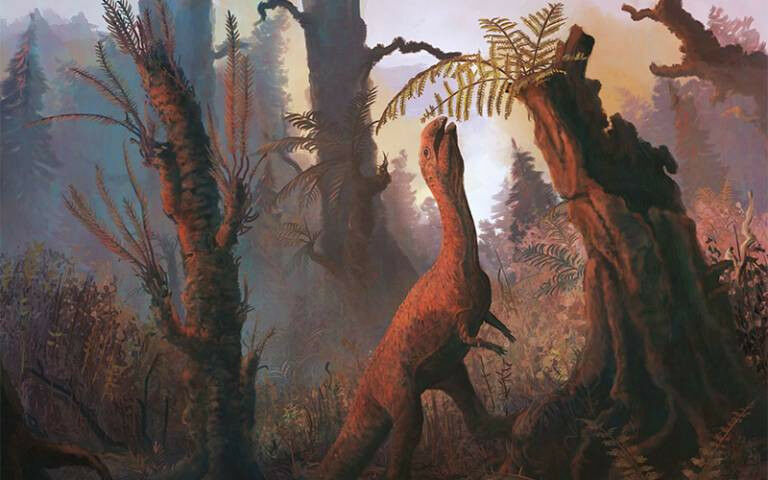
Impression of Effigia - Artist’s impression of Effigia. Credit: Mark Witton
Impression of Effigia - Artist's impression of Effigia. Credit: Mark Witton - A Triassic herbivore, known for its supposed similarities to a modern-day ostrich, has been revealed to have an entirely different approach to feeding from previously thought, according to research involving UCL and University of Birmingham researchers. The new findings, published in The Anatomical Record , reveal a much broader diversity of herbivore behaviour during the Triassic period than has been recognised to date. Called Effigia, the animal was about the size of a gazelle and lived in North America around 205 million years ago. Its fossil remains were found in the Ghost Ranch Quarry in New Mexico in the 1940s, although the material was not formally described by palaeontologists until 2006. The remains had been relatively poorly preserved in the quarry and the skull, in particular, was quite badly deformed, making accurate reconstruction problematic. Early analysis of the specimen concluded that it belonged to the group of reptiles that includes crocodylians and birds and which started to flourish in the Triassic period.
TO READ THIS ARTICLE, CREATE YOUR ACCOUNT
And extend your reading, free of charge and with no commitment.