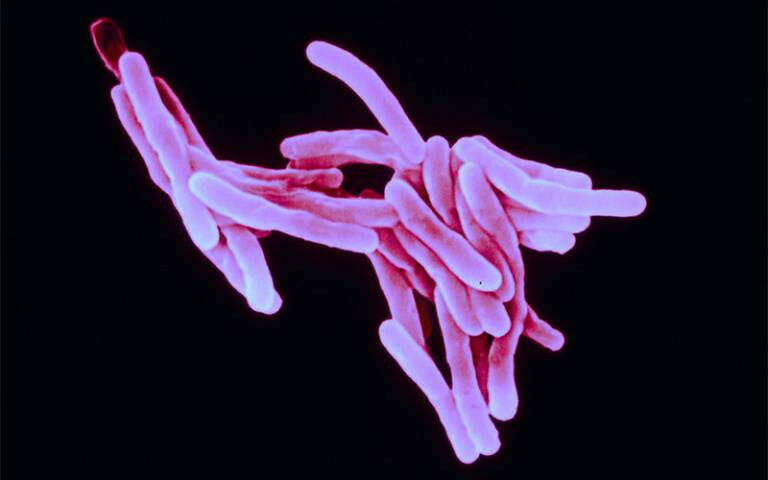
Mycobacterium tuberculosis - Mycobacterium tuberculosis. Photographer: Alain Grillet. Copyright Sanofi Pasteur (via Flickr , CC BY-NC-ND 2.0)
Mycobacterium tuberculosis - Mycobacterium tuberculosis. Photographer: Alain Grillet. Copyright Sanofi Pasteur (via Flickr , CC BY-NC-ND 2. Scientists have spotted signs of 'pre-resistance' in bacteria for the first time - signs that particular bacteria are likely to become resistant to antibiotics in the future - in a new study led by UCL and Great Ormond Street Hospital researchers. The team led by Great Ormond Street Hospital (GOSH) and the UCL Great Ormond Street Institute of Child Health, in collaboration with the Peruvian Tuberculosis programme and funded by Wellcome and the National Institutes of Health (USA), sequenced the full genomes of over 3,000 tuberculosis (TB) samples, tracing TB infections back through patients over nearly two decades. Mycobacterium tuberculosis (TB) is a bacterial infection that largely affects the lungs. It was the second leading infectious cause of death after COVID-19 in 2020, killing 1.5m people.
TO READ THIS ARTICLE, CREATE YOUR ACCOUNT
And extend your reading, free of charge and with no commitment.