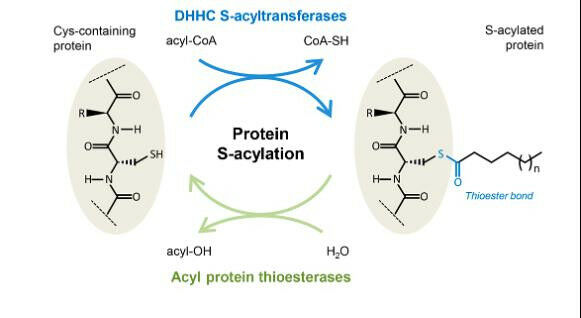
The acylation-deacylation cycle in the cell. Credit: G. van der Goot (EPFL)
The acylation-deacylation cycle in the cell. Credit: G. van der Goot (EPFL) - Combining structural biology, molecular simulations, mutagenesis, and in vivo assays, EPFL scientists have made the first extensive study of the mode of action of the enzyme acyl thioesterase, which regulates deacylation, one of the most critical functions of the cell. S'acylation is the process of chemically linking a lipid to protein via a thioester bond. It is an important process of the cell that regulates the localization and function of numerous proteins. It promotes lipid membrane association of the protein, for instance to the plasma membrane, Golgi apparatus, or inner nuclear membrane. Like most biochemical processes in the cell, protein S'acylation is reversible to regulate the functions of acylated proteins. S'acylation is reversed by the enzymes acyl protein thioesterases (APTs).
TO READ THIS ARTICLE, CREATE YOUR ACCOUNT
And extend your reading, free of charge and with no commitment.