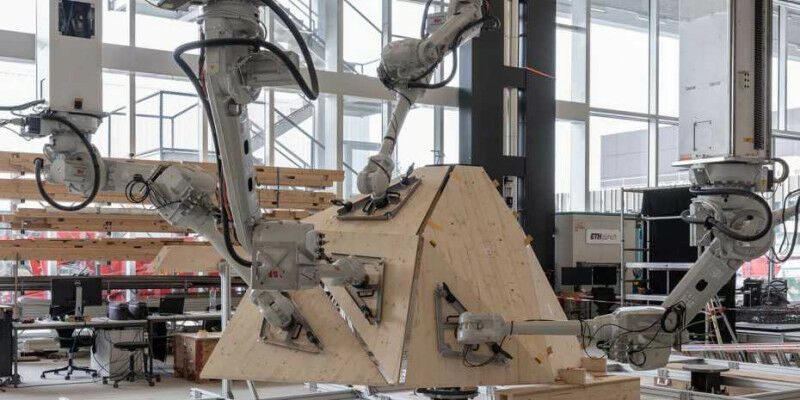
During the creation of the sculpture, four robotic arms pick up wooden boards in unison and place them in space according to the computer design. (Image: Pascal Bach / Gramazio Kohler Research, ETH Zurich)
During the creation of the sculpture, four robotic arms pick up wooden boards in unison and place them in space according to the computer design. (Image: Pascal Bach / Gramazio Kohler Research, ETH Zurich) - With the help of artificial intelligence and four collaborative robots, researchers at ETH Zurich are designing and fabricating a 22.5-metre-tall green architectural sculpture. Working with Müller Illien Landscape Architects, Timbatec and other partners from industry and research, researchers from the group led by ETH architecture professors Fabio Gramazio and Matthias Kohler are creating a green architectural sculpture for the Tech Cluster Zug. Soaring to a height of 22.5 metres, the structure will consist of five geometrically complex wooden pods that are slightly offset from each other and supported by eight thin steel pillars. The sculpture, named after the Babylonian queen to whom the ancient Hanging Gardens of Babylon have been attributed, is being designed and built using innovative digital methods that were developed as part of the project. AI proposes a clever design. In the conventional design process for projects like this, architects try to take the different requirements of a building or structure into account in its design, and then adjust that design until all the requirements are met in the best way possible.
TO READ THIS ARTICLE, CREATE YOUR ACCOUNT
And extend your reading, free of charge and with no commitment.