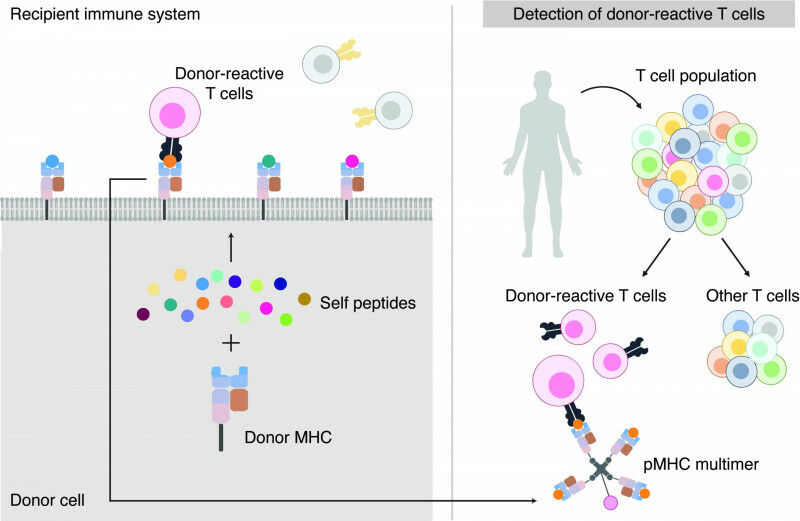
Figure 1: The research team discovered that self-peptides pairing with foreign MHC molecules are recognised by donor-reactive T cells, leading to transplant rejection. Figure 2: If the same applies in humans this discovery could be used as the basis of a diagnostic test to accurately distinguish the presence of donor reactive T cells from all other T cells present.
Figure 1: The research team discovered that self-peptides pairing with foreign MHC molecules are recognised by donor-reactive T cells, leading to transplant rejection. Figure 2: If the same applies in humans this discovery could be used as the basis of a diagnostic test to accurately distinguish the presence of donor reactive T cells from all other T cells present. Researchers from the University of Sydney and Monash University have made a significant discovery that uncovers what is happening at the molecular level when an organ transplant is recognised as foreign by the immune system. Working in mice, the team identified the precise molecular targets of transplant rejection and showed how this knowledge could potentially be used in the future to improve immune monitoring of clinical transplant recipients. The study is published in the Journal of Clinical Investigation. Each year around 1500 Australian lives are saved through organ transplants, but the risk of that transplant being rejected remains significant. Rejection occurs when a person's immune system recognises the organ as foreign and starts to attack it, just like it would a virus. "While the early outcomes of organ transplants are excellent, the long-term results aren't nearly as good with many people losing their transplant within 10 to 15 years," said senior author Associate Professor Alexandra Sharland from the University of Sydney's Charles Perkins Centre and Faculty of Medicine and Health.
TO READ THIS ARTICLE, CREATE YOUR ACCOUNT
And extend your reading, free of charge and with no commitment.