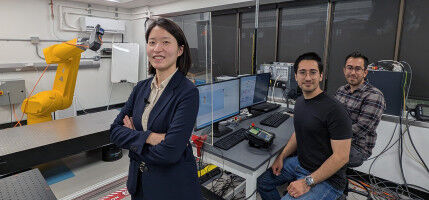
© 2021 EPFL - A team of EPFL engineers has discovered a strategy to shape living tissues like dough. Have you ever wondered how a sphere of cells, morula, gives rise to tissues and organs with mesmerizing shapes and architectures? The secret lies in the mechanics of embryonic tissues. They exhibit a viscous (fluid-like) and an elastic (solid-like) behavior depending on the forces acting on them. At EPFL, Erik Mailand, a PhD candidate, and Selman Sakar, an assistant professor of mechanical engineering, have decided to harness the mechanoresponsive rheology of cell clusters for engineering tissues with long-lasting complex morphologies. From single cell mechanics to multicellular organization Bioengineers have long been studying animal tissues with the goal of being able to engineer replicas for regenerative medicine and drug screening. Although there are manufacturing techniques that temporarily recapitulate the form and structure of native tissues, the prescribed morphologies are not stable. Cells continuously apply forces to arrange themselves and the surrounding scaffold into an energetically favorable state, and their physical activities almost always disrupt order.
TO READ THIS ARTICLE, CREATE YOUR ACCOUNT
And extend your reading, free of charge and with no commitment.
Your Benefits
- Access to all content
- Receive newsmails for news and jobs
- Post ads