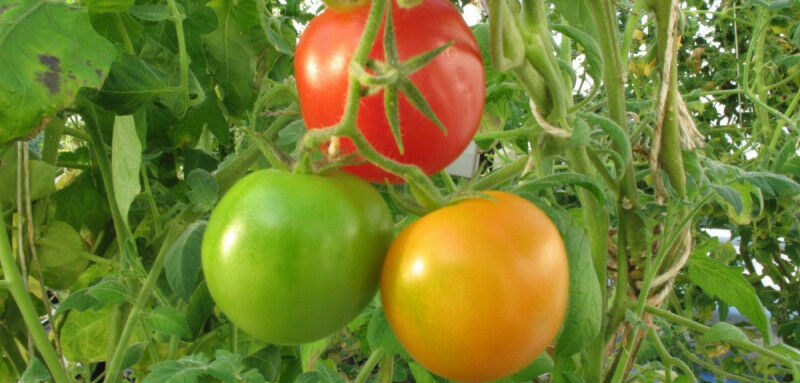
Tomatoes ripening in Plant Sciences' greenhouse Credit: Paul Jarvis
Tomatoes ripening in Plant Sciences' greenhouse Credit: Paul Jarvis - Scientists at the University of Oxford's Department of Plant Sciences have discovered how the overall process of fruit ripening in tomato (including colour changes and softening) can be changed -speeded up or slowed down - by modifying the expression of a single protein located in subcellular organelles called the plastids. This offers a novel opportunity for crop improvement. The production of fruit is a vital process for plants because it enables them to reproduce and thrive. One strategy that plants use to ensure that their fruit are successful is to give them a colourful appearance, so that they are attractive to animals for seed dispersal. In tomato, the fruit ripening process involves dramatic changes in tiny "organelles" inside the fruit cells called plastids. It is these plastids that are responsible for giving colour to the fruit. In spite of their central importance in delivering fruit colour, surprisingly little was known about how plastids participate in the ripening process.
TO READ THIS ARTICLE, CREATE YOUR ACCOUNT
And extend your reading, free of charge and with no commitment.