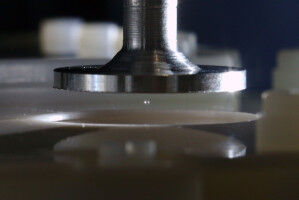
The solid electrolyte developed by the UNIGE team lets the ions move efficiently within the sodium batteries. (c) Xavier Ravinet / Olivier Gaumer - UNIGE
The solid electrolyte developed by the UNIGE team lets the ions move efficiently within the sodium batteries. (c) Xavier Ravinet / Olivier Gaumer - UNIGE - A team from the University of Geneva has developed a new material that improves the performance of solid-state sodium batteries, a less dangerous and more durable alternative to lithium. The future of battery technologies lies in sodium. More sustainable than lithium - which currently powers most of our devices and vehicles - sodium is also abundant on the earth's surface. The only problem is that its ions do not move easily in the liquid electrolyte of conventional batteries, making it less efficient than lithium. Therefore, the solution lies in the development of a solid electrolyte. A scientific team from the University of Geneva has succeeded in meeting this challenge by modifying the crystal structure of a material composed of carbon, boron and hydrogen (carbo hydridoborate).
TO READ THIS ARTICLE, CREATE YOUR ACCOUNT
And extend your reading, free of charge and with no commitment.