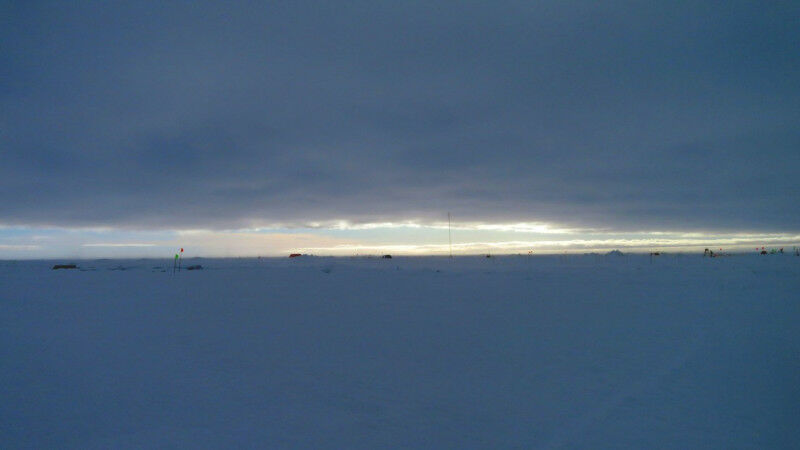
 The polluted warm air-mass photographed on April 15, 2020 by the EPFL researcher.
The polluted warm air-mass photographed on April 15, 2020 by the EPFL researcher. J. Schmale - During the MOSAiC research expedition, conducted in the Arctic pack ice between 2019 and 2020, scientists observed an atmospheric perturbation triggered by the intrusion of a highly polluted warm air-mass. A first study providing further insight into the phenomenon and its potential implications has just been published. Weather instruments installed on the Polarstern icebreaker recorded a huge jump in the near-surface air temperature, from -30.8°C to almost 0°C, between 14 and 17 April 2020. This was a record swing that had never been observed in the central Arctic Ocean within the available weather climatology, starting 40 years ago. The icebreaker was operating under the MOSAiC expedition , which aims to gain a better understanding of the drivers of Arctic accelerated climate change and how it is impacting the region. During the expedition, hundreds of research instruments made millions of real-time measurements, collecting data on biological, chemical and physical properties from the ocean bottom to deep inside clouds.
TO READ THIS ARTICLE, CREATE YOUR ACCOUNT
And extend your reading, free of charge and with no commitment.
Your Benefits
- Access to all content
- Receive newsmails for news and jobs
- Post ads