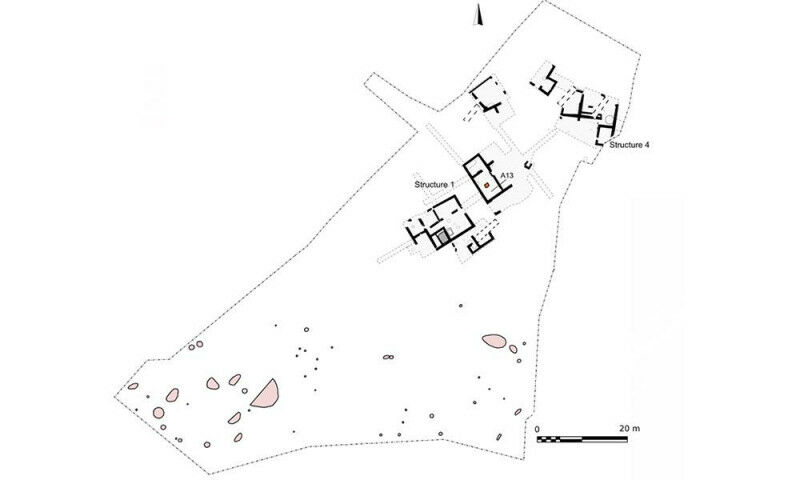
Planimetry of El Zarzalejo, a Roman farm occupied between the 2nd and 3rd centuries AD, located in Arroyomolinos (Community of Madrid).
Planimetry of El Zarzalejo, a Roman farm occupied between the 2nd and 3rd centuries AD, located in Arroyomolinos (Community of Madrid) . The archaeology of the Roman period has traditionally been focused on monumental aspects, but very little is known about what the daily life of peasantry was like. An investigation by the Universidad Carlos III de Madrid (UC3M) delves into the life of peasant settlements based on the archaeological findings discovered in the Community of Madrid, in the numerous rescue excavations that were carried out during the real estate bubble period. "The study of this hidden archaeological heritage is allowing us to learn how they interacted with the surrounding landscape, the type of crops they grew preferentially, how they cooked, the domestic animal species they exploited, the type of crockery they used, how exchange circuits worked at a local and regional level, etc.", says the project manager, Jesús Bermejo, professor in the Department of Humanities: History, Geography and Art at UC3M. The study reveals, for example, that Madrid's gastronomy could have inherited typical dishes from farms in the central areas of Roman Spain, such as potaje and cocido (typical soup and stew). Researchers have found remains of pots that were used to cook these dishes, with a very similar method to the current one. Those peasants threw a piece of meat together with the available vegetables and left them on the fire in a very uncontrolled way, while they carried out the agricultural work.
TO READ THIS ARTICLE, CREATE YOUR ACCOUNT
And extend your reading, free of charge and with no commitment.