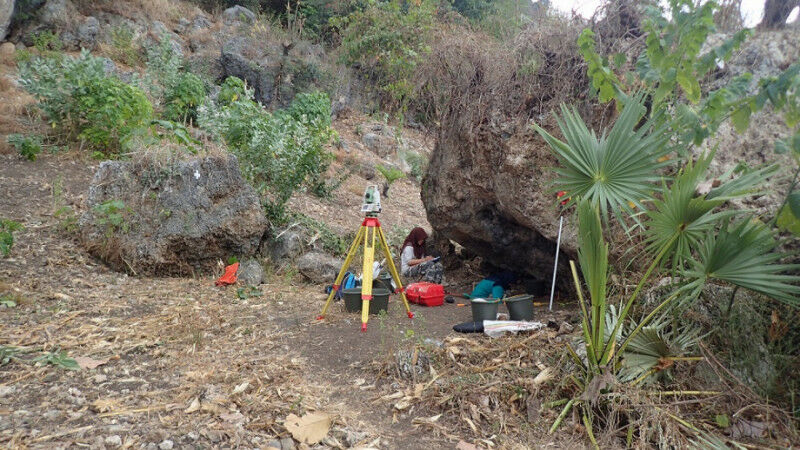
Excavation in progress at Jareng Bori rockshelter in Pantar island. Photo: Dr Stuart Hawkins/ANU
Excavation in progress at Jareng Bori rockshelter in Pantar island. Photo: Dr Stuart Hawkins/ANU - DNA analysis of ancient human remains has shed new light on an "explosion" of intermixing cultures and genetics in an island region north of Australia known as Wallacea - an imprint that is still detectable in East Indonesians today. The study , conducted by researchers from The Australian National University (ANU) and the Max Planck Institutes in Germany, is the first to use this kind of ancient DNA analysis to clarify, from an ancient genetic perspective, the significant maritime migration of Austronesian-speaking peoples out of Taiwan, southern China and the Philippines into Wallacea. This significant migration occurred between 3,000 and 3,500 years ago. The findings reveal these ancient migratory peoples mixed with local indigenous populations from Wallacea and Papua, giving rise to a genetic footprint that is believed to have left a mark on many of the islands in the Asia-Pacific region. Study co-author Professor Sue O'Connor said the Austronesian-speaking peoples introduced domestic animals, crops and pottery into the Wallacean islands along with other cultural and social practices that have since morphed and evolved over thousands of years. "This research shows for the first time what a tremendous genetic melting pot the islands to Australia's north are," she said.
TO READ THIS ARTICLE, CREATE YOUR ACCOUNT
And extend your reading, free of charge and with no commitment.