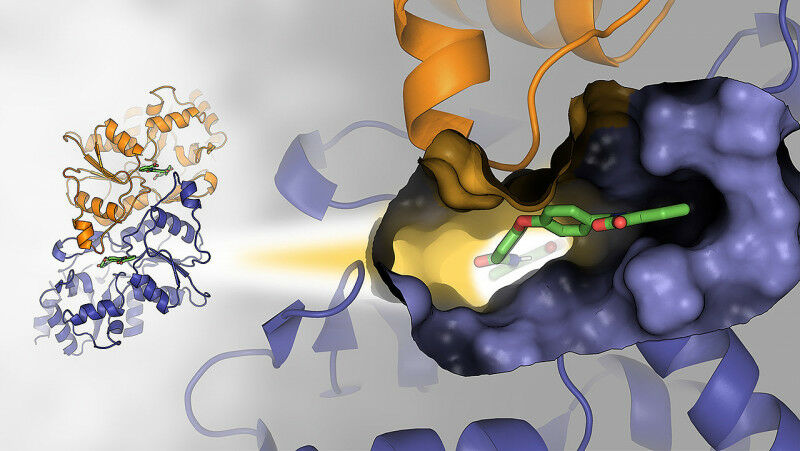
Dimeric structure of phosphoglycolate phosphatase. The enlarged section on the right shows the ligand-binding pocket in complex with the small molecule inhibitor CP1.
Dimeric structure of phosphoglycolate phosphatase. The enlarged section on the right shows the ligand-binding pocket in complex with the small molecule inhibitor CP1. Increased cell proliferation is a key feature of diseases such as cancer. A research team from the University of Würzburg and two Leibniz Institutes has now succeeded in indirectly influencing this process. As differently as cancers or autoimmune diseases such as multiple sclerosis, rheumatoid arthritis or psoriasis affect people - they all have one characteristic in common: they are accompanied by increased cell proliferation. Accordingly, the diseased cells must vigorously increase their production of molecular building blocks, which is inevitably linked to greatly increased energy demands. Therefore, control over the cellular production of building blocks for macromolecule synthesis and energy homeostasis is an important strategy in the development of new drugs against such diseases.
TO READ THIS ARTICLE, CREATE YOUR ACCOUNT
And extend your reading, free of charge and with no commitment.