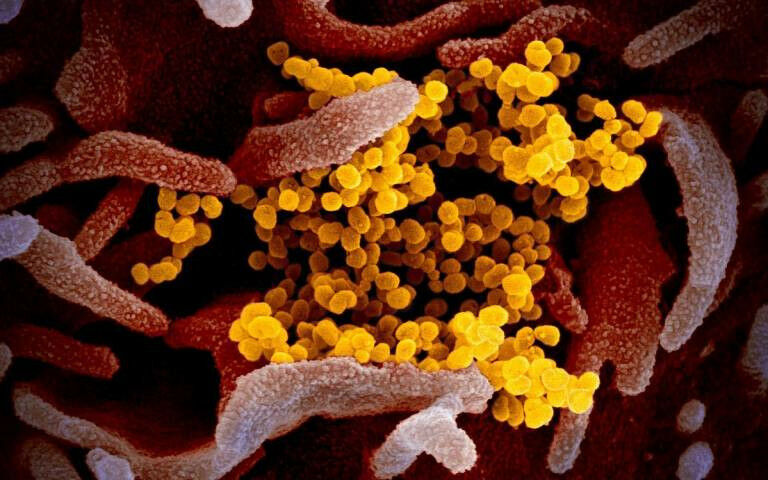
This scanning electron microscope image shows SARS-CoV-2 (yellow)--also known as 2019-nCoV, the virus that causes COVID-19--isolated from a patient in the U.S., emerging from the surface of cells (pink) cultured in the lab.
This scanning electron microscope image shows SARS-CoV-2 ( yellow )-also known as 2019-nCoV, the virus that causes COVID-19-isolated from a patient in the U.S., emerging from the surface of cells ( pink ) cultured in the lab. A blood test taken at the time of Covid-19 infection could predict who is most likely to develop long Covid, suggests a new small-scale study led by UCL researchers. The study, published in eBioMedicine , analysed proteins in the blood of healthcare workers infected with SARS-CoV-2, comparing them to samples from healthcare workers who had not been infected. Usually protein levels in the body are stable, but the researchers found a dramatic difference in levels of some of the proteins up to six weeks following infection, suggesting disruption to a number of important biological processes. Using an artificial intelligence (AI) algorithm, they identified a "signature" in the abundance of different proteins that successfully predicted whether or not the person would go on to report persistent symptoms a year after infection. The researchers say that, if these findings are repeated in a larger, independent group of patients, a test could potentially be offered alongside a polymerase chain reaction (PCR) test that could predict people's likelihood of developing long Covid.
TO READ THIS ARTICLE, CREATE YOUR ACCOUNT
And extend your reading, free of charge and with no commitment.