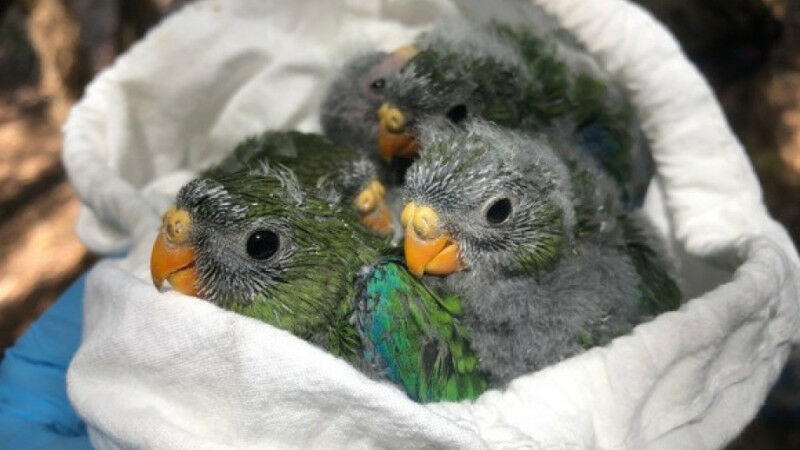
The wing shape of orange-bellied parrots bred in captivity differs significantly from their wild counterparts. Photo: Dejan Stojanovic/ANU
The wing shape of orange-bellied parrots bred in captivity differs significantly from their wild counterparts. Photo: Dejan Stojanovic/ANU - Animals bred in captivity can experience significant changes to their bodies, behaviour and health, which affects their chances of survival when they're released into the wild, a new review from The Australian National University (ANU) has shown. According to the study's authors, the conditions animals experience in captivity are often very different to what they'd face in the wild, which can cause them to change in a number of ways. Some of these changes are obvious but others are more difficult to detect, which can limit the effectiveness of reintroduction programs for threatened species. These changes - known as phenotypic changes - can take various forms. Examples include fish reared in aquariums taking on different body shapes, butterflies that forget how to migrate after release to the wild, captive-bred lions having weaker jaws because of soft foods, and highly intelligent marine mammals suffering worse health due to stress. "The world is facing an extinction crisis, and many people are doing the best they can to save at-risk species.
TO READ THIS ARTICLE, CREATE YOUR ACCOUNT
And extend your reading, free of charge and with no commitment.